Construction sites have always been dangerous. The standard approach to that danger has been reactive: after someone falls, after toxic gas accumulates, after a piece of equipment strikes a worker, the incident is investigated, the cause is identified, and theoretically, the conditions are corrected. This model assumes that accidents are discrete events that can be prevented by better procedures. But what if the accident is not a discrete event? What if it is a process—a slow accumulation of fatigue, a gradual drift into a hazardous area, a physiological state that the worker themselves does not recognize until it is too late?
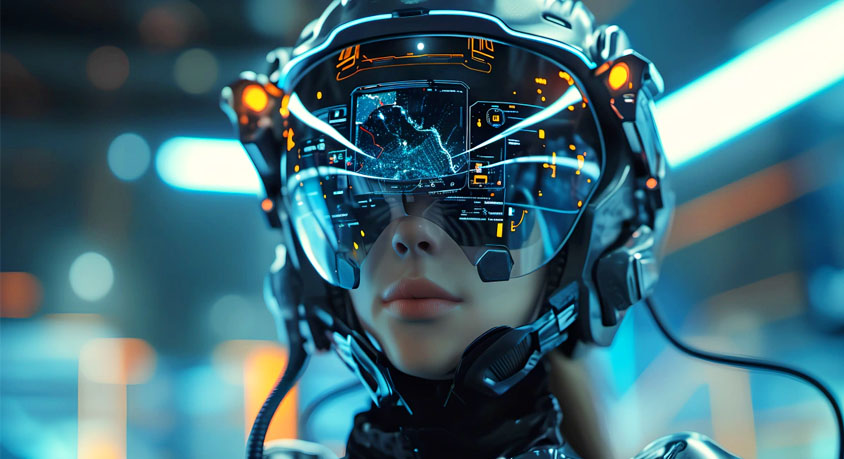
A new generation of smart safety equipment is being deployed on industrial sites, in construction zones, and in mining operations that addresses this gap. The most visible element is the smart hard hat, a piece of personal protective equipment that now contains sensors capable of monitoring location, motion, heart rate, and ambient air quality. It does not replace the protective function of the hard hat. It adds a layer of awareness that the wearer cannot maintain alone.
The sensors embedded in these helmets form a network that communicates with a central platform. GPS provides location data, but indoors or in urban canyons where GPS fails, ultra-wideband beacons placed around the site provide centimeter-level positioning. An accelerometer detects falls—not just the impact, but the sudden change from vertical to horizontal orientation that precedes it. A heart rate sensor, typically in contact with the forehead or temple, monitors pulse continuously. A gas sensor samples the air around the wearer’s breathing zone, detecting carbon monoxide, hydrogen sulfide, or volatile organic compounds before the worker smells them.
The logic of the system is not simply to collect data but to act on it in real time. When a worker enters a zone where heavy equipment is operating, the helmet buzzes a proximity alert. When the heart rate exceeds a threshold that indicates exhaustion or distress, a notification goes to the site supervisor. When the accelerometer detects a fall and no subsequent movement, the helmet initiates an automated call to emergency services, transmitting location and worker identity before any human has assessed the situation. The interval between incident and response shrinks from minutes to seconds.
What makes this more than incremental improvement is the shift from reactive to predictive. The traditional model of workplace safety relies on workers to recognize their own limits and supervisors to monitor conditions continuously. Both are prone to failure. A worker may not realize they are dehydrated until they are dizzy. A supervisor cannot watch thirty people simultaneously. The helmet does not replace human judgment, but it provides a constant stream of data that judgment can act on earlier. A worker whose heart rate has been elevated for an hour without a corresponding increase in activity is not just working hard. They are approaching a physiological limit that they may not feel until they cross it.
There is a broader question here about what safety means when the monitoring is continuous. The worker wearing a smart helmet is not being trusted to self-report their condition. They are being monitored as an object of data, with thresholds set by someone else. The system does not ask if they are tired. It decides. This is not necessarily intrusive—the thresholds are typically set conservatively, and the alerts are designed to prevent harm. But it does shift the locus of judgment from the worker to the algorithm. A supervisor receiving a notification that a worker is “fatigued” is not receiving information. They are receiving a decision dressed as information.
The data generated by these systems also creates new liabilities. A worker who is flagged for elevated heart rate and subsequently suffers a cardiac event has a record of their physiological state before the event. That record is evidence. Whether it protects the worker or the employer depends on context. A worker who was flagged repeatedly and not removed from the site may have grounds for a claim. A worker who was flagged and removed may have grounds for a different kind of claim—that the data was wrong, that the threshold was inappropriate, that they were discriminated against based on a sensor reading. The technology creates new legal terrain that has not been fully mapped.
What is worth examining is not whether smart helmets will be adopted—they are already being adopted, particularly on large-scale industrial projects where insurance premiums and safety records drive procurement. The question is how they will change the relationship between workers and the systems that manage them. Safety equipment has traditionally been passive. It protected against impact, against falls, against chemical exposure. It did not watch. Smart equipment watches continuously. It records. It makes decisions. The worker wearing it is not just protected. They are observed. And observation, even with good intentions, changes the dynamics of work.
The industrial sites deploying this technology are not doing so out of altruism. They are doing so because accidents are expensive, because insurance rates reflect safety records, because a single fatality can halt a project for weeks. The technology pays for itself in avoided incidents. But the effect is not simply cost reduction. It is a redefinition of what safety means—from a condition of the environment to a condition of the worker. The hard hat no longer just shields the head. It reports on the person beneath it. The worker becomes part of the safety system, not as a conscious agent but as a data source.
The fall detection algorithm that calls 911 before you hit the ground is impressive. It will save lives. But the deeper shift is the assumption that accidents can be anticipated by monitoring the body that will experience them. That assumption is not obviously false, but it is not obviously complete either. A worker who is monitored continuously may be safer in some dimensions and more constrained in others. The helmet does not only protect. It also watches. And what it watches is the person who wears it.
Disclaimer: Mention of any brand or trademark is for identification only and does not imply partnership or endorsement