In the summer of 2021, when Texas lost power for days during a winter storm few were prepared for, the official explanation pointed to frozen natural gas infrastructure and a grid designed for summer peaks, not winter extremes. What went unmentioned in most news coverage was a quieter, more structural observation: the grid was built to send electricity in one direction, from large power plants to passive consumers. That architecture assumed that homes would never need to send power back. That assumption is now unraveling, not because of a single technological breakthrough, but because enough homes have quietly accumulated the capacity to do exactly that.
Consider what a growing number of American households now own without necessarily thinking about it in aggregate terms. Solar panels on the roof, a battery in the garage, an electric vehicle parked in the driveway. Individually, each of these is a consumer appliance. Collectively, they form a distributed energy resource capable of doing something the grid was never designed to accommodate: sending power in the opposite direction. When a homeowner charges their EV overnight with cheap wind power and later, during an afternoon heatwave when electricity prices spike, exports a portion of that stored energy back to the grid, they are no longer just a customer. They have become a participant in wholesale energy markets, whether they realize it or not.
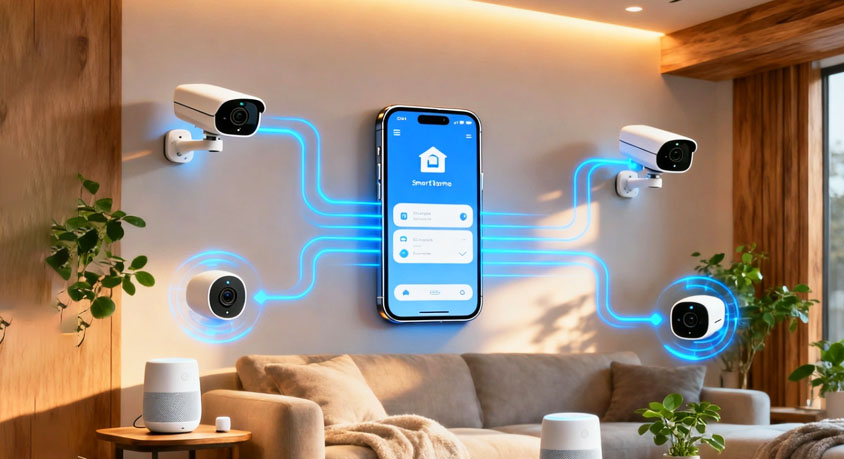
This inversion of the traditional utility model is what the industry calls a virtual power plant, a term that conceals as much as it reveals. There is no central facility, no smokestack, no single control room. Instead, a software platform aggregates thousands of individual home batteries, EV chargers, and solar inverters into a single coordinated resource that utilities can call upon during peak demand. The homeowner sees none of the complexity. Their smart gateway simply responds to price signals, charging when power is cheap and discharging when the price exceeds a preset threshold. The financial result is measurable: a typical household with solar, storage, and an EV participating in such a program can earn several hundred dollars annually while reducing their overall electricity bill to near zero.
The mechanism driving this shift is straightforward enough to describe but subtle in its implications. Electricity markets have always had price variation, but that variation was invisible to residential consumers until smart meters and time-of-use rates made it legible. Once price signals become transparent, the logic of arbitrage becomes irresistible. Store energy when the price is low, sell or self-consume when the price is high. This is precisely what utilities do with pumped hydro and natural gas storage. Now households can do the same with a battery in the garage.
California’s pilot programs have demonstrated the scale this can reach. During heatwaves, aggregated home batteries have delivered over 100 megawatts of capacity to the grid, enough to power a small city without activating a single gas peaker plant. Texas, after its 2021 crisis, has accelerated similar deployments. Australia, which has the world’s highest per capita rooftop solar adoption, now has entire suburbs operating as de facto virtual power plants, with households trading energy among themselves through software platforms that optimize flows without human intervention.
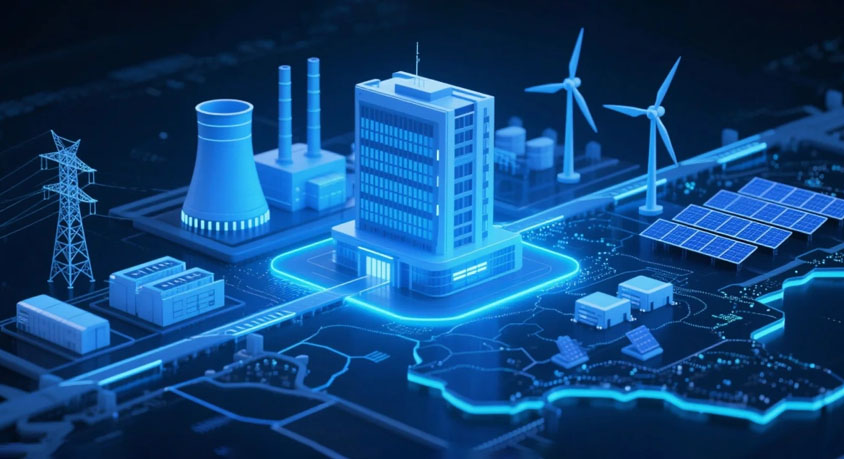
What makes this development noteworthy is not the technology itself—batteries, inverters, and solar panels are mature technologies—but the structural shift it represents in how energy infrastructure is owned and operated. For a century, electricity generation was centralized because economies of scale favored large plants over small ones. That calculus changes when the marginal cost of adding a solar panel to an existing roof is near zero, when an EV battery is already purchased for transportation and its storage capacity becomes a sunk cost that can be leveraged for energy arbitrage. The result is a grid that increasingly resembles a network of small-scale participants rather than a hierarchical system of large producers and passive consumers.
The open questions are not technical but institutional. How should utilities compensate households for services that were previously provided by centralized assets? What regulatory frameworks accommodate a system where power flows bidirectionally across every connection? And what happens to the traditional utility business model when its largest customers also become its competitors? These questions are being debated in public utility commissions across the country, with answers that will shape the energy landscape for decades.
What is already clear, however, is that the household has become an energy node in a way it never was before. The car in your driveway, the panels on your roof, the battery in your garage—these are not merely appliances. They are assets capable of generating revenue, stabilizing the grid, and fundamentally altering the economics of electricity. The shift is incremental, visible only in aggregate statistics and changing rate structures. But the underlying logic is simple: when energy storage becomes distributed, so does energy market participation. And once that happens, the distinction between producer and consumer begins to dissolve.
Disclaimer: Mention of any brand or trademark is for identification only and does not imply partnership or endorsement