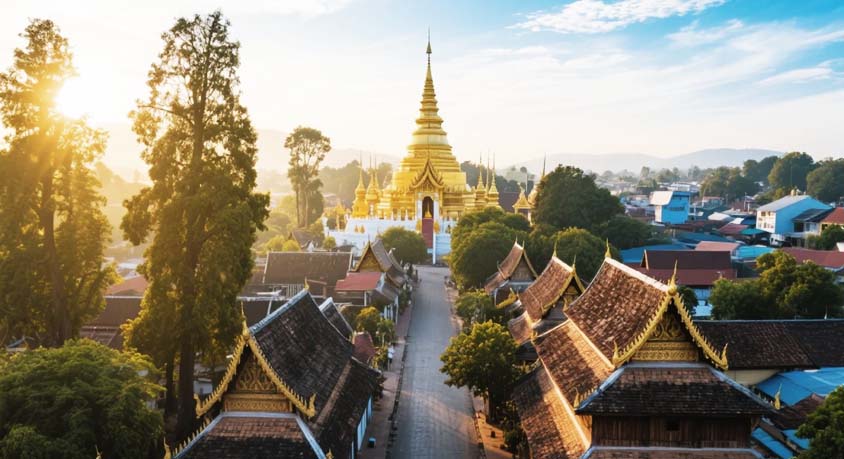
The humidity was thick enough to chew as I sat on a plastic stool that definitely wasn't designed for a grown adult, tucked away in a corner of the Chang Phuak Gate market. A motorcycle zoomed past, close enough to singe my leg hair, while a grandmother in a floral apron handed me a steaming bowl of Khao Soi for less than the price of a bottle of bottled water at home. My girlfriend wiped sweat from her forehead, laughing because we had just spent forty minutes arguing with a red songthaew driver who insisted that "tourist price" was a universal law of physics. In that moment, watching the broth splash against the chipped porcelain, the glittering, over-promoted temples of the Old City felt like a fever dream. We weren't there for the postcard; we were there for the ten-baht charcoal-grilled pork skewers that actually tasted like smoke and history.
Everyone tells you to head straight to Doi Suthep the moment you land, but staring at the back of five hundred other people’s heads while climbing stairs isn't exactly a spiritual awakening. Instead, we spent a Tuesday wandering into the Wua Lai neighborhood, specifically looking for the silver-working district. While the Sunday Walking Market is a claustrophobic nightmare of mass-produced elephant pants and overpriced smoothies, the actual workshops behind the main road are silent, save for the rhythmic tapping of hammers. We met an old man who didn't speak a word of English but showed us how to etch patterns into metal for the cost of a polite nod and a genuine interest in his craft. It cost us nothing to watch a master at work, yet the "cultural experiences" sold in the hotel lobby were quoted at eighty dollars per person.
Let's talk about the "Digital Nomad" tax that has turned Nimmanhemin into a strange suburb of Los Angeles. I watched a guy pay seven dollars for a smashed avocado toast while three streets over, a family-run canteen served a full spread of stir-fried basil and crispy pork for a fraction of that. The trick isn't just about finding cheap food; it’s about recognizing when you’re being charged for the air conditioning and the aesthetic wallpaper. We tracked our spending meticulously: a boutique "resort" inside the city walls wanted 120 dollars a night, but we found a teak wood guesthouse with a sprawling garden ten minutes away for twenty-five. The difference? No infinity pool for Instagram photos, but I’d rather have the extra ninety-five dollars for a week’s worth of foot massages and actual adventures.
One afternoon, we skipped the "Elephant Sanctuary" brochures that promised ethical interactions but looked suspiciously like circuses. We hopped on a rented motorbike—costing about six dollars for the day—and rode north toward the Bua Tong Sticky Waterfalls. Most tourists avoid this because it’s a forty-minute drive, but there is something deeply satisfying about climbing up a waterfall where the limestone is so grippy you feel like Spider-Man. We spent four hours there for the grand total of zero dollars. A local family shared their sliced mango with us, and we traded some of our bottled water. It wasn't a "curated" tour; it was just a hot afternoon spent in the woods where the only thing being sold was the sound of the wind through the trees.
If you’re visiting during the transition into the rainy season, people will tell you it’s a "bad time" to go. They’re wrong. The mountains turn a shade of emerald that looks photoshopped, and the afternoon downpours are the only thing that keeps the temperature from becoming an oven. We sat through a tropical deluge in a tiny coffee shop in the forest of Mae Kampong, a village tucked into the hillside. While the "mainstream" advice is to stick to the city cafes, taking a local bus to the foothills lets you breathe air that doesn't smell like diesel exhaust. The homestays there are humble, the blankets are heavy, and the coffee is grown ten feet from where you're sitting. You’ll pay "local" prices because the "luxury" crowds are too afraid of a little mud on their designer sneakers.
The biggest scam in Northern Thailand isn't the guy telling you the palace is closed; it's the belief that you have to pay for "curated" beauty. We found a small temple called Wat Palad, hidden halfway up a mountain trail. While everyone else took the paved road to the top, we hiked the "Monk’s Trail," following orange rags tied to trees. We reached a stone bridge covered in moss, with water trickling over ancient carvings and absolutely no ticket booth in sight. My friend leaned against a mossy stupa and whispered that this felt more like Thailand than any of the gold-plated shrines in the city center combined. We spent the sunset there, listening to the forest wake up, realizing that the best parts of the journey are the ones the tour buses can't reach because the roads are too narrow and the profit margins are too thin.
True value in travel isn't about being cheap; it's about refusing to pay for the illusion of authenticity when the real thing is usually just one alleyway away.
Disclaimer: Mention of any brand or trademark is for identification only and does not imply partnership or endorsement