
Introduction: The Monster That Captured the World
Twenty-eight years after its debut, Pokémon remains a cultural juggernaut, blending childhood nostalgia with cutting-edge technology. From a $900,000 Pokémon TCG card auction to Pokémon GO crowds flooding streets worldwide, the franchise has mastered the art of bridging generations. This article dives into why Pokémon isn’t just a game—it’s a global obsession, exploring its evolution, cultural impact, and secret sauce for staying timeless.
The Roots of an Empire
The Birth of a Gaming Revolution
Released in 1996, Pokémon Red and Green (international versions: Red and Blue) introduced players to a pocket-sized universe where friendship and strategy ruled. Players became “Trainers,” capturing creatures like Pikachu, Bulbasaur, and Charmander to battle rivals and explore Kanto. The simple premise—“Gotta Catch ’Em All”—masked a masterclass in addictive gameplay, laying the groundwork for a franchise that now spans games, TV shows, movies, and merchandise.
The Rise of the Trading Card Game
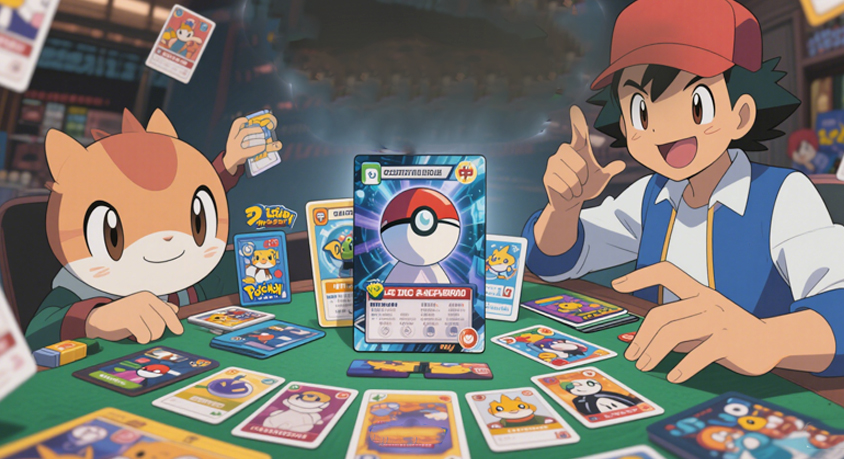
While video games laid the foundation, the Pokémon TCG turned fandom into a global industry. Launched in 1996, the TCG combined strategy with collectibility. Cards like Pikachu Illustrator—a 1998 promo card auctioned for $900,000 in 2023—showcase the franchise’s blend of artistry and rarity. Today, the TCG boasts a thriving competitive scene, with professional tournaments offering six-figure prizes.
Pokémon GO: When Gaming Meets Reality
The AR Revolution That Broke the Internet
In 2016, Pokémon GO redefined mobile gaming by merging augmented reality (AR) with real-world exploration. Players flocked to parks, landmarks, and Times Square to catch creatures, turning sidewalks into battle arenas and parks into social hubs. The game’s viral success (over 1.8 billion downloads) proved Pokémon’s ability to adapt to new tech while fostering real-world connections.
Community and Chaos
Pokémon GO’s “raids” and “events” created spontaneous gatherings, from families bonding over catching Legendary Pokémon to strangers collaborating to defeat a gym boss. Yet, the phenomenon wasn’t without controversy. Crowds disrupted neighborhoods, and debates arose about safety. Still, the game’s core mission—encouraging exploration and teamwork—resonated globally.
Why Pokémon Defies Time
Nostalgia as a Gateway
For older fans, Pokémon evokes memories of Game Boy adventures. For younger audiences, it’s a gateway to modern hits like Pokémon Scarlet and Violet. This intergenerational bridge thrives on simplicity: the core loop of catching, training, and battling remains intuitive, even as new entries experiment with open-world designs.
A Universe Without Controversy
Unlike franchises reliant on violence or mature themes, Pokémon emphasizes creativity and friendship. Its absence of political or religious undertones ensures broad appeal, while its focus on teamwork (“Gotta Catch ’Em All”) reinforces positivity.
Innovating Without Losing Identity
The franchise balances tradition with innovation. While Scarlet and Violet introduced open-world exploration, the TCG embraced hybrid physical/digital play with Unified Minds sets. Even classic mechanics, like Mega Evolution, resurface in new forms, rewarding long-time fans.
The Future of Pokémon
Beyond Games
Pokémon’s empire extends to fashion collabs (e.g., Pokémon Center x Pokémon GO apparel), immersive experiences like Pokémon Live! theater, and even a planned Pokémon-themed resort in Japan. These expansions keep the brand relevant without diluting its essence.
The Next Generation of Trainers
With AR tech advancing, rumors swirl of a Pokémon GO 2 leveraging AI and photorealistic graphics. Meanwhile, the TCG’s Sword & Shield meta decks hint at deeper competitive layers. One thing is certain: Satoshi Tajiri’s brainchild will keep evolving, ensuring it remains a playground for imagination.
Conclusion: Catching the Dream
Pokémon isn’t just a franchise—it’s a shared dream. From a $900,000 TCG card to streets packed with AR hunters, its magic lies in uniting generations through wonder and adventure. As long as players yearn to explore, connect, and collect, Pokémon will keep evolving, one Poké Ball at a time.
Disclaimer: Mention of any brand or trademark is for identification only and does not imply partnership or endorsement