Most ordinary users only witness the convenient side of smart home scenes, yet few notice invisible risks hidden behind every voice command and automatic linkage. Mass installed household IoT devices are quietly collecting daily behavior data, and such data flow has never been fully transparent to ordinary families.
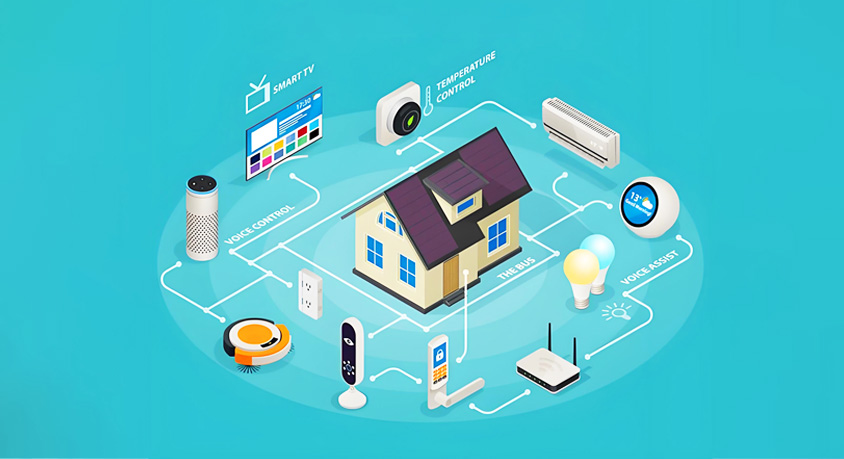
The core driving force for the popularization of smart home systems lies in reducing redundant household labor and optimizing living space management logic. Standardized IoT linkage protocols enable different home appliances to complete collaborative operation without manual repeated setting, which effectively cuts down daily time consumption for residents.
From automatic light adjustment following outdoor light intensity to temperature preset linkage of air conditioners and water heaters, these grounded IoT applications truly improve living comfort. Such technological landing does not rely on fancy marketing concepts, but matches actual living habits of urban residents.
Every smart device connected to home wireless networks has independent data collection modules, covering daily rest time, travel tracks, living preferences and even family personnel activity rules. These fragmented life data will be aggregated and uploaded to third-party cloud servers without clear user reminder in most cases.
Many low-cost smart home products lack complete data permission control mechanisms. Users cannot independently close partial data collection functions, nor know the specific flow direction and usage purpose of collected personal life information.
Whole-house smart home networking greatly expands the attack surface of home local area networks. Once a single low-security smart device is invaded, hackers can break through the whole home network barrier and remotely control multiple household electrical equipment.
Continuous technical iteration forces users to replace old smart devices regularly to maintain normal linkage functions. Early purchased smart home products will gradually lose compatibility with new systems, forming continuous invisible consumption pressure for ordinary families.
Ordinary users can sort out all networked smart devices regularly and close unnecessary automatic data upload permissions. Choosing smart home products with open local control functions can effectively reduce excessive dependence on external cloud platforms and lower information leakage risks.
Technological convenience never comes free, and every intelligent experience in daily life is accompanied by corresponding hidden sacrifices. Balancing usage experience and personal digital sovereignty has become a necessary course for all users who use smart home IoT products.
Disclaimer: Mention of any brand or trademark is for identification only and does not imply partnership or endorsement