You know that feeling when your phone buzzes with a notification, and for a split second, your heart drops because you think it’s bad news? Now imagine that feeling stretched over weeks, the agonizing wait for biopsy results after a routine scan showed something "suspicious."
We’ve all heard the stories, or maybe lived them. In the world of wellness and health optimization, we talk a lot about biohacking and longevity, but the elephant in the room is always the random, unwelcome guest: cancer. We treat it like a bogeyman, something you either fight or sadly succumb to. But what if the entire narrative is shifting beneath our feet? What if the fight is no longer the main event?
The core shift happening right now in oncology isn't a miracle drug, though those are cool too. It's happening in the data centers and server rooms where Internet of Things technology meets radiology. We’re moving from a reactive, fear-based model to a proactive, almost boringly routine one.
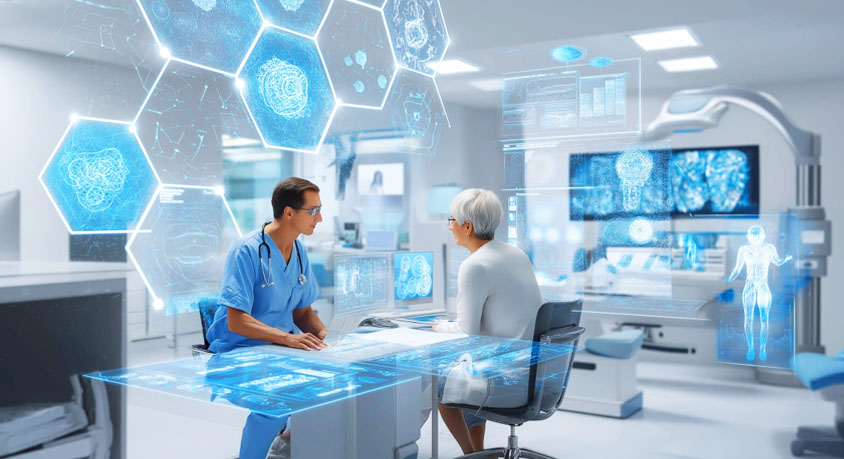
Imagine a world where your annual physical doesn't just check your cholesterol, but runs your imaging data through an AI that has analyzed millions of scans. This technology learns to spot the whisper of a tumor years before it becomes a shadow on a radiologist's screen. We aren't talking about replacing the doctor; we're talking about giving them a superpower.
The IoT ecosystem—those connected devices from smart scales to wearable monitors—is creating a continuous stream of health data. When you add high-resolution medical imaging into that stream, you create a tidal wave of information. And AI thrives on waves.
Consider the case of a friend of mine. She’s a 34-year-old graphic designer, does hot yoga, probably has a better gut microbiome than me. She went for a routine low-dose CT scan, part of a study, not because she felt sick. The standard radiologist report came back clean. Clean.
But the AI algorithm, trained on a dataset of scans from the past decade, flagged a micro-lesion in her lung. It was smaller than a grain of rice. The kind of thing a human eye, no matter how trained, is simply not wired to consistently catch. It was flagged as a 7% risk.
A second radiologist, armed with the AI's annotation, took a second look. They decided on a watch-and-wait approach. A follow-up scan six months later showed no change. Then another in a year. It was benign. It was nothing.
But here’s the kicker: the AI didn't cause a panic. It caused a pause. It turned a potential future stage-four diagnosis into a series of "huh, let's keep an eye on that" moments. The entire ordeal was a massive, beautiful, life-affirming false alarm. That’s the real product here: peace of mind, delivered by a server farm.
This technology is fundamentally altering the statistical landscape. When you catch a cancer at stage one, the five-year survival rate for most types hovers above 90%. At stage four, that number can plummet to single digits. The logic is brutally simple, yet it’s been the hardest nut to crack in medicine.
We’ve poured billions into better treatments for late-stage cancer, but the real ROI, both financially and emotionally, is in prevention. IoT-enabled AI doesn't just look for existing cancer; it looks for the *potential* of cancer. It’s pattern recognition on a scale that’s incomprehensible to the human brain.
It can correlate genetic markers, lifestyle data from your fitness tracker, and minuscule changes in tissue density from year to year. It’s not making a diagnosis; it’s making a prediction. And a prediction gives you time. Time to adjust your diet, time to mitigate environmental factors, time to simply live without the sword of Damocles hanging over your head.
Disclaimer: Mention of any brand or trademark is for identification only and does not imply partnership or endorsement