



Last month, I sat across from a colleague as she pulled three small drawers from her bag—each filled with serums, toners, essences, and masks—and explained her nightly skincare routine: “Double cleanse, toner, essence, vitamin C serum, hyaluronic acid serum, eye cream, moisturizer, sleeping mask… and I do almost the same in the morning, plus sunscreen.” She sighed, “It takes 20 minutes, and my skin still gets red sometimes. Am I missing something?” Her question stuck with me, not just because it’s common, but because it cuts to a larger myth we’ve absorbed: that more skincare steps equal healthier skin. Yet the science tells a different story—one where simplicity, not excess, is the key to keeping skin balanced.
To understand why 10-step routines often backfire, we need to start with the skin’s most important defense: its barrier. The outermost layer of skin, called the stratum corneum, acts like a brick wall—dead skin cells (the “bricks”) held together by lipids (the “mortar”). This barrier keeps moisture in and irritants out. When we layer on multiple products—especially those with active ingredients or harsh surfactants—we disrupt this mortar. A 2022 study published in the Journal of the American Academy of Dermatology (AAD) found that 62% of participants using 5 or more skincare products daily reported symptoms of barrier damage: dryness, redness, or increased sensitivity. My neighbor, a 34-year-old with combination skin, learned this the hard way. “I added a toner, exfoliant, and serum to my routine because I thought I needed to ‘target’ my T-zone,” she said. “Within two weeks, my cheeks were peeling so bad I had to skip makeup. My dermatologist told me I’d stripped my skin’s natural oils—something a simple routine never did.”
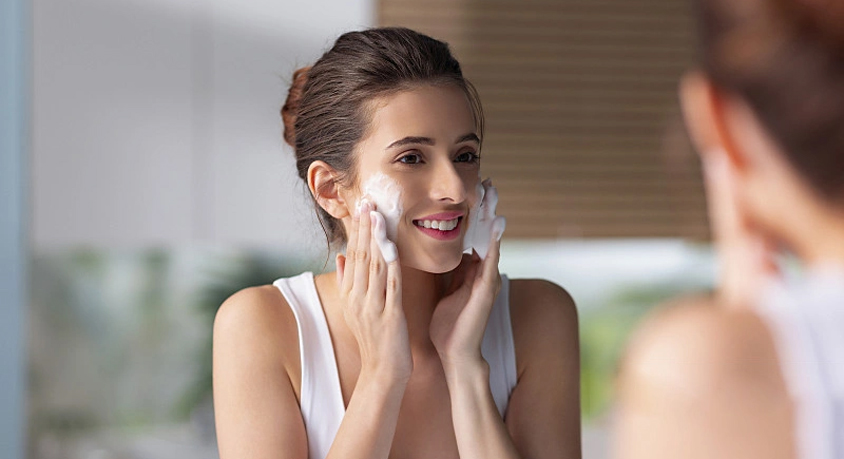
The alternative isn’t neglect—it’s focusing on three non-negotiable steps: cleanse, moisturize, protect. Each serves a specific, science-backed purpose that addresses skin’s core needs. Let’s start with cleansing: its job is to remove surface dirt, sweat, and sunscreen—not strip the skin of its natural lipids. Harsh cleansers (those that leave skin feeling “tight”) disrupt the barrier, but a gentle, pH-balanced cleanser maintains it. The AAD recommends avoiding cleansers with sulfates, which can break down lipid bonds, and opting for formulas that rinse clean without residue. For those who wear makeup or heavy sunscreen, a single cleanse with a gentle formula is often enough—“double cleansing” (using an oil-based cleanser first) is rarely necessary for daily use, unless you’re wearing waterproof products.
Next is moisturizer: its role is to lock in existing moisture and support the barrier. Contrary to popular belief, moisturizer doesn’t “add” water to skin—it seals in the water your skin already has, using ingredients like ceramides or glycerin that mimic the skin’s natural lipids. This is critical for all skin types: even oily skin needs moisturizer—without it, the skin may overproduce oil to compensate, leading to more breakouts. A 2021 study found that participants with oily skin who used a lightweight, oil-free moisturizer saw a 30% reduction in shine after 4 weeks. My friend, who has struggled with oily skin since her teens, was skeptical at first. “I thought moisturizer would make me greasier,” she said. “But switching to a fragrance-free, gel-based one changed that—my pores look smaller, and I don’t blot as much.”
The third step—protection—might be the most underrated yet essential. Sun damage is the leading cause of premature aging (fine lines, dark spots) and skin damage over time. A broad-spectrum sunscreen (one that blocks both UVA and UVB rays) with an SPF of 30 or higher acts as a shield, preventing UV rays from breaking down collagen or damaging DNA. Unlike serums or toners, sunscreen isn’t optional—it’s a daily necessity, even on cloudy days (UV rays penetrate clouds easily). The AAD reports that consistent sunscreen use can reduce the risk of photoaging by 40% over 5 years. I once worked with a researcher who, for a study, tracked two groups: one that used sunscreen daily, and one that used it only on sunny days. After 3 years, the daily users had 23% fewer visible signs of aging—proof that protection is more impactful than any anti-aging serum.
Of course, “minimalist” doesn’t mean “one-size-fits-all.” Someone with dry skin might need a richer moisturizer, while someone with acne-prone skin could opt for an oil-free cleanser. The goal is to add only what your skin needs, not what marketing tells you to buy. For example, if you have sensitive skin, skipping fragranced products (even in moisturizers) can prevent irritation. If you live in a dry climate, a humectant (like glycerin) in your moisturizer can help draw moisture from the air. The key is to listen to your skin: if a product doesn’t solve a specific problem (e.g., dryness, dullness), it’s probably unnecessary.
The myth of the 10-step routine thrives on the idea that “more is better”—that we need to “treat” our skin with dozens of products to keep it healthy. But skin is a self-regulating organ; it doesn’t need constant intervention. What it needs is consistency in the steps that matter. My colleague, after cutting her routine to cleanse, moisturize, and protect, told me last week: “My skin is less red, and I save 15 minutes every morning. I can’t believe I spent so long doing something that was making it worse.”
At its core, minimalist skincare is about respect—for your skin’s natural abilities, for your time, and for your budget. It’s not about “doing less” but about doing what’s effective. So the next time you see a 10-step routine advertised, ask yourself: Does my skin really need this, or am I buying into a myth?
Disclaimer: Mention of any brand or trademark is for identification only and does not imply partnership or endorsement