You crushed your workout on Monday. By Tuesday morning, you felt proud—a little tight, maybe, but strong. Then Wednesday arrives. You try to walk down the stairs, and suddenly your thighs scream. Sitting down becomes an event. Standing up requires a strategy. You think to yourself: The lactic acid must still be stuck in my muscles.
That explanation feels right. It has been repeated in gyms, locker rooms, and fitness blogs for decades. But here is the problem: it is completely wrong. And holding onto this myth might actually be keeping you from recovering properly.
Let’s follow the science. Lactic acid is produced when your muscles work hard without enough oxygen—think sprinting or heavy lifting. But here is what most people do not know: your body clears lactic acid within about an hour after exercise. A 2010 study in The Journal of Physiology measured lactate levels in athletes immediately after intense training and again 60 minutes later. The levels had returned to baseline. That soreness you feel one or two days later? Lactic acid has been gone for over 24 hours.
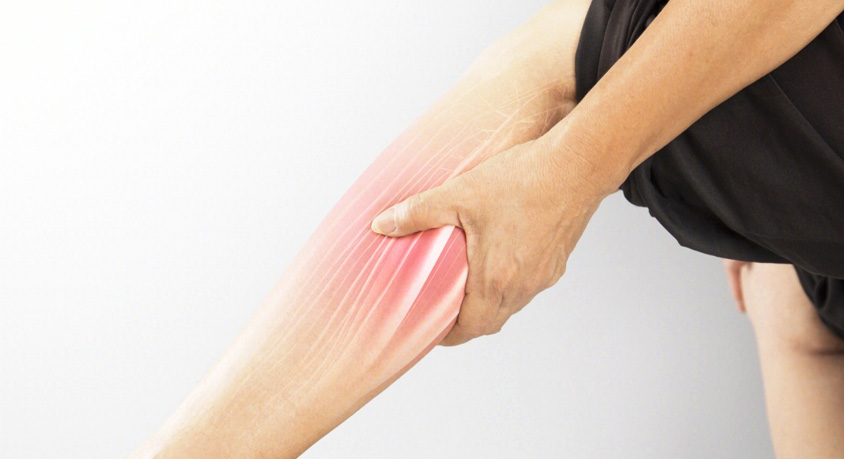
So what is actually happening? The real culprit is something called delayed onset muscle soreness, or DOMS. When you perform unfamiliar or intense exercise—especially movements that lengthen muscles under tension, like downhill running or lowering a dumbbell slowly—you create microscopic tears in your muscle fibers. Your immune system responds by sending inflammatory cells to clean up and repair the damage. That inflammation, along with fluid shifts and increased nerve sensitivity, is what causes the pain and stiffness. The process peaks 24 to 72 hours after exercise, which perfectly matches your Wednesday morning staircase struggle.
This explains two common but confusing experiences. First, why you can do the same workout two weeks later and feel almost no soreness. Your muscles have adapted; the microscopic tears are smaller, and the repair process is more efficient. If lactic acid were the cause, every hard workout would hurt equally forever. Second, why extremely fit athletes still get sore when they try a new activity—like a runner taking their first spin class. It is not about fitness level. It is about novelty.
Now for the practical part. If you want to feel better, do not reach for “lactic acid flush” gimmicks. What actually helps? Light movement. A 2018 meta-analysis in the Journal of Sports Medicine found that low-intensity activity—walking, easy cycling, or swimming—modestly reduced DOMS pain compared to complete rest. Moving keeps blood flowing, which helps clear inflammatory byproducts and delivers nutrients to repair those tiny tears.
Foam rolling and massage can provide temporary relief as well, not by “breaking up” anything, but by reducing nerve sensitivity and improving local blood flow. A 2020 randomized trial showed that 20 minutes of foam rolling immediately after exercise and again 24 hours later significantly lowered perceived soreness scores. Epsom salt baths are another popular choice. The evidence for magnesium absorption through skin is thin, but warm water alone relaxes muscles and eases stiffness, and the ritual itself helps you feel cared for—and that matters.
What you should not do is take anti-inflammatory drugs like ibuprofen before or right after a workout hoping to prevent soreness. Several studies, including a 2017 paper in Medicine & Science in Sports & Exercise, have shown that blocking inflammation too early can actually interfere with muscle repair and long-term adaptation. Some soreness is not your enemy. It is your body learning and growing stronger.
If the pain is sharp, uneven (one leg much worse than the other), or comes with dark urine, stop and see a doctor. But for the vast majority of us, that two-day ache is just a sign that you challenged your body in a new way. It does not mean you did something wrong. It does not mean you are out of shape. It means you stepped outside your routine. And that is something to feel quietly proud of, even if sitting down on the toilet makes you wince.
Next time someone tells you to “flush the lactic acid,” smile and know the truth. Then take a gentle walk, roll out your legs, and give your body the rest it is asking for. The soreness will fade. The strength will stay.
Disclaimer: Mention of any brand or trademark is for identification only and does not imply partnership or endorsement