You’ve probably heard the advice a hundred times: turn off lights when you leave a room, unplug appliances when they’re not in use, run the dishwasher late at night. The logic is sound, but the execution relies on you remembering, every single day, to optimize a system you barely think about. And even then, the savings are modest—a few dollars here, a few there, never enough to feel like you’ve cracked some hidden code in the way your house consumes energy. The assumption embedded in this advice is that the only variable you control is how much you use. But there’s another variable, one that matters just as much: when you use it.
Electricity is not a flat-priced commodity. In most states, utilities have shifted to time-of-use rate structures, meaning the price per kilowatt-hour changes depending on when you draw power. Afternoons are expensive, when air conditioners strain and businesses are running full tilt. Overnight hours are cheap, sometimes a fraction of the daytime rate, because the grid has surplus capacity and the utility would rather sell it at a discount than idle its generators. The difference between peak and off-peak can be as much as three to five times. Running your dishwasher at 6 PM might cost you 35 cents per kilowatt-hour. Running it at 10 PM might cost you 9 cents. The machine does the same work. The energy is the same. The only difference is timing. And timing is something a machine can handle far more reliably than a human.
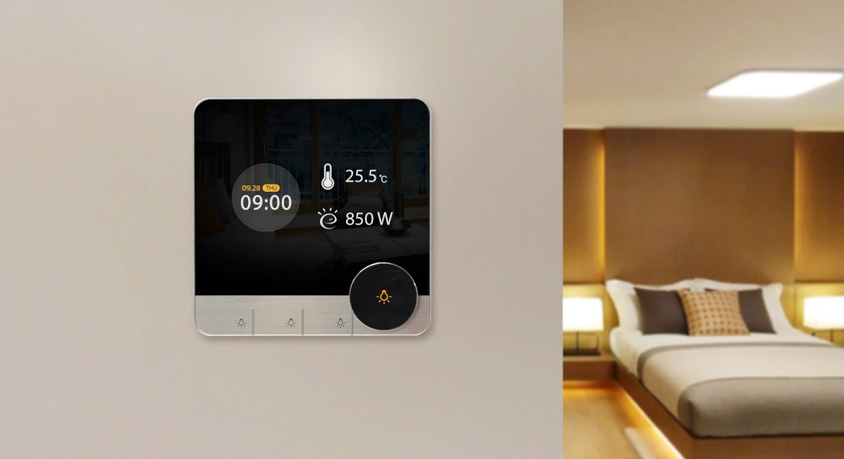
This is where smart thermostats and smart plugs move from being conveniences to being economic tools. A smart thermostat like the Nest or Ecobee has been able to learn your schedule for years, adjusting temperatures when you leave the house and warming things up before you return. That saves energy by reducing use. But the newer layer of functionality is price-aware scheduling. These devices can pull your utility’s rate data, either from an online feed or from a local utility integration, and make decisions based not just on whether you’re home but on what electricity costs at that exact moment. Pre-cooling the house before the expensive afternoon rates kick in, then letting the temperature drift upward during peak hours, can cut cooling costs substantially without making you uncomfortable. The house becomes a thermal battery, storing coolth when it’s cheap and using it when it’s not.
Smart plugs extend the same logic to the appliances that don’t have built-in connectivity. A $20 smart plug between your wall outlet and your portable EV charger, your water heater, or your washing machine can turn a dumb appliance into a scheduled one. You set a schedule—or better, you let an app that knows your utility rates set it for you—and the plug simply refuses to supply power during expensive periods. Your car charges at 2 AM when wind power is abundant and cheap. Your water heater heats overnight, storing hot water for the morning. Your washing machine runs when the grid is least stressed. You don’t think about any of it. The decisions are made by software that understands the price curve better than you ever could.
The deeper mechanism here is what economists call arbitrage, but applied to household energy rather than financial markets. You’re buying electricity when it’s cheap, storing it in the form of a charged battery, a hot water tank, or a cooled house, and consuming it when it would otherwise be expensive. The storage medium isn’t a Tesla Powerwall—though that works too—it’s the thermal mass of your home, the chemical capacity of your EV battery, the latent heat in your water heater. These are storage systems you already own. Smart devices just make them price-sensitive.
There’s a structural shift embedded in this that’s worth noticing. For most of the history of residential electricity, the consumer had no visibility into price variation. You paid the same rate regardless of when you used power. Time-of-use rates make the price visible, but visibility alone doesn’t help if you can’t act on it. The smart home closes that loop. It makes the price actionable. The thermostat doesn’t just know the temperature. It knows the cost of changing it. The plug doesn’t just know whether the appliance is on. It knows whether it should be on now or later. The decision-making moves from the person, who has limited attention and imperfect information, to the device, which has perfect information and infinite patience.
The savings from this approach are not hypothetical. A typical household with time-of-use rates and a smart thermostat can save 10 to 15 percent on cooling costs without any change in comfort. Adding smart control of an EV charger increases savings substantially, since EV charging is one of the largest single loads in a modern home. In California, where time-of-use rates are common and electricity is expensive, households with smart charging report annual savings in the hundreds of dollars. The devices pay for themselves in months, sometimes weeks.
There’s a broader implication here about what it means to be an energy consumer. The traditional model is passive: you use power, you pay for it. The smart home model is active, but the activity is automated. You don’t need to become an energy trader. You just need to let your devices trade on your behalf. The thermostat doesn’t ask permission to pre-cool before the peak period. It just does it, because you told it once that your comfort preferences include a range, not a fixed number. The plug doesn’t ask whether it can delay the dryer. It knows the laundry will still be done by morning.
The question that remains is whether this automation makes us more or less aware of our energy use. There’s an argument that it makes us less aware—that we outsource the thinking and then forget entirely. But there’s a counterargument: awareness that doesn’t lead to action is just anxiety. The goal isn’t to think about electricity prices. It’s to use less expensive electricity. If the devices can do that without requiring your attention, they’ve solved the problem more cleanly than any amount of mindfulness ever could. The thermostat knows when to cool. The plug knows when to charge. You know the bill is lower. That’s enough.
Disclaimer: Mention of any brand or trademark is for identification only and does not imply partnership or endorsement