Have you ever sat in a high-rise office, staring at a spreadsheet that makes your soul feel like dry toast, and thought to yourself that the dream life involves manual labor and waking up at 6 AM to water parsnips? It sounds like a mid-life crisis, but for millions of us, it is just a typical Tuesday evening in Stardew Valley. There is a bizarre paradox at the heart of this game that critics and fans have debated for a decade: why does a generation terrified of home ownership and physical exhaustion find so much peace in a simulator that is essentially a second job without the health insurance? The answer goes much deeper than just cute pixels and relaxing music.
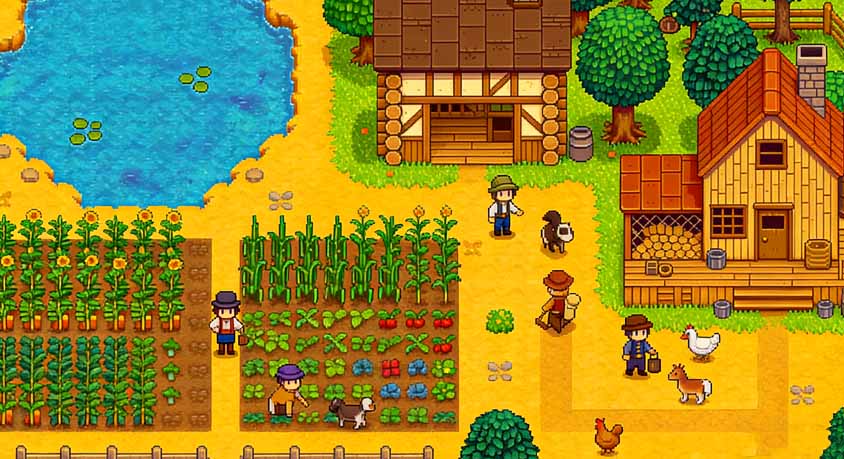
You start the game in the most relatable way possible, as a burnt-out corporate drone escaping a soul-crushing cubicle to take over your grandfather's dilapidated farm. From there, the world opens up into a masterpiece of loop-based storytelling. You clear rocks, plant seeds, and manage a stamina bar that depletes far too quickly, much like my actual social battery on a Friday night. But unlike the real world, where your hard work often feels like shouting into a void, Stardew Valley operates on a beautiful system of absolute fairness. If you plant a cauliflower, and you water it, it will grow. It is a radical concept in 2026, where the "grind" usually involves algorithms and uncertainty. Here, the grind is tactile and rewarding.
The game is a massive sandbox for anyone who likes to feel in control of their own little universe. For the planners and the perfectionists, there is the intense strategy of maximizing crop yields and building the most efficient artisan empire of mayonnaise and ancient fruit wine. For the social butterflies, there is a whole town of eccentric neighbors to win over with gifts and conversation. Whether you are a guy looking for the thrill of diving deep into the monster-infested mines or a girl wanting to design the most aesthetically pleasing cottage-core dreamscape, there is a seat at the table for you. Even the most cynical gamers find themselves softened by the simple act of choosing which villager to dance with at the Flower Dance.
However, do not let the charming art style fool you into thinking this is just a mindless distraction. Stardew Valley hides a surprising amount of grit and humanity behind its colorful exterior. You will meet characters dealing with genuine struggles, from loneliness to the existential dread of a small town being slowly swallowed by a giant corporation. It is this human element that keeps it from feeling like a mechanical toy. You aren’t just building a farm; you are rebuilding a community. You have to be careful, though, because time in the valley moves fast. A quick session to "just check the mail" can easily morph into a sunrise reality check where you realize you have been optimizing sprinklers for five hours straight.
What makes this game a consistent heavy hitter compared to big-budget titles is that it was famously created by a single person over several years. This artisanal touch is evident in every secret passage and hidden note. There is a soul here that you cannot manufacture in a boardroom. It challenges the idea that a game needs hyper-realistic graphics to be immersive. Instead, it proves that if you give people a sense of belonging and a clear path to success, they will happily spend hundreds of hours digging in the digital dirt. It is less of a game and more of a sanctuary for those of us who just want to see something we started actually reach its full potential.
In a world that feels increasingly fragmented and chaotic, Stardew Valley remains the ultimate reminder that growth takes time, effort, and maybe just a little bit of magic.
Disclaimer: Mention of any brand or trademark is for identification only and does not imply partnership or endorsement