



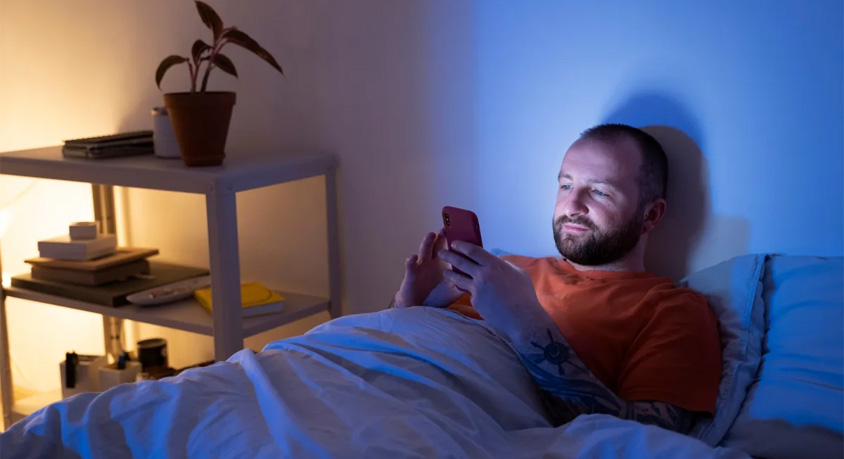
It is a quiet, almost sacred modern ritual. The day is done, the lights are dimmed, and you settle into bed. In the final moments before sleep, your hand finds its way to the smartphone on your nightstand. You scroll through messages, catch up on news, or watch a brief video. It feels like a gentle unwinding. Yet, in the deep recesses of your brain, a small, pinecone-shaped gland is receiving a catastrophic signal. It is being told, in no uncertain terms, that the sun is still high in the sky. This gland—the pineal gland—is your body's master timekeeper for sleep, and the light from your screen is forging a fake noon at midnight. The consequence is not just a delayed bedtime, but a fundamental disruption of the hormonal symphony that orchestrates repair, memory consolidation, and cellular rejuvenation throughout the night.
The biology at play is exquisitely precise. Your circadian rhythm is set by light, specifically by specialized photoreceptors in your eyes called intrinsically photosensitive retinal ganglion cells (ipRGCs). These cells are uniquely sensitive to short-wavelength blue light, which is abundant in daylight and the LED screens of our devices. When these cells detect blue light, they send a direct signal, via the suprachiasmatic nucleus, to the pineal gland, ordering it to halt production of melatonin, the hormone that cues sleepiness and regulates sleep depth. Research from Harvard Medical School has demonstrated that blue light exposure in the evening suppresses melatonin secretion more powerfully than any other wavelength of light. A seminal study showed that exposure to room light (about 200 lux) before bedtime shortened melatonin duration by about 90 minutes and significantly reduced melatonin levels. The light from a typical smartphone or tablet, held close to the face, can be far more intense. You are not just tricking your brain; you are actively dismantling the very chemical pathway designed to usher you into restorative sleep.
This creates a double deficit. First, you may struggle to fall asleep as the sleep signal (melatonin) is blocked. Second, and more insidiously, the quality of the sleep you do get is compromised. Melatonin is not just a sleep switch; it is a potent antioxidant and a regulator of other biological rhythms. Its suppression is linked to fragmented sleep, reduced REM sleep, and shallower slow-wave sleep—the very stages crucial for cognitive repair and emotional processing. Over time, this chronic mistiming contributes to systemic issues: metabolic dysregulation, impaired immune function, and increased systemic inflammation. Your brain and body are waiting for the darkness signal to begin their critical work, but you are holding a tiny, bright sun to your eyes, forcing a perpetual biological jet lag.
The solution is not to live in darkness after sunset, but to become strategic about the quality of light we expose ourselves to. The principle is simple: mimic the natural progression of the sun. After the sun sets, we should progressively reduce exposure to blue light. This can be achieved through two accessible, non-disruptive strategies. The first is environmental: replacing bright white or blue-toned evening bulbs with amber or red-light bulbs. Red light has the longest wavelength and has been shown in studies, such as those published in The Journal of Physiology, to have a negligible impact on melatonin suppression. Creating a "sunset" in your living room and bedroom signals safety to your pineal gland. The second is personal: wearing blue-light-filtering glasses in the 2-3 hours before bed. These amber-lensed glasses effectively block the problematic wavelengths, allowing you to use necessary devices without bombarding your ipRGCs. Combined with enabling the built-in "night shift" or "blue light filter" on your devices, these actions create a powerful buffer.
This is not about fear-mongering against technology. It is about respectful coexistence. It is the recognition that our biology evolved under a single, reliable sun, and that we must now consciously curate our artificial light environment to honor that ancient rhythm. By making this simple shift—opting for gentle red light in the evening and filtering the harsh blue—you are not just improving sleep. You are stopping the internal "solar eclipse," allowing your pineal gland to perform its ancient, vital function under the true darkness of night. You are giving your brain the correct time so it can properly repair the day. It is one of the simplest and most profound acts of physiological alignment available to us: choosing to let night truly be night.
Disclaimer: Mention of any brand or trademark is for identification only and does not imply partnership or endorsement