
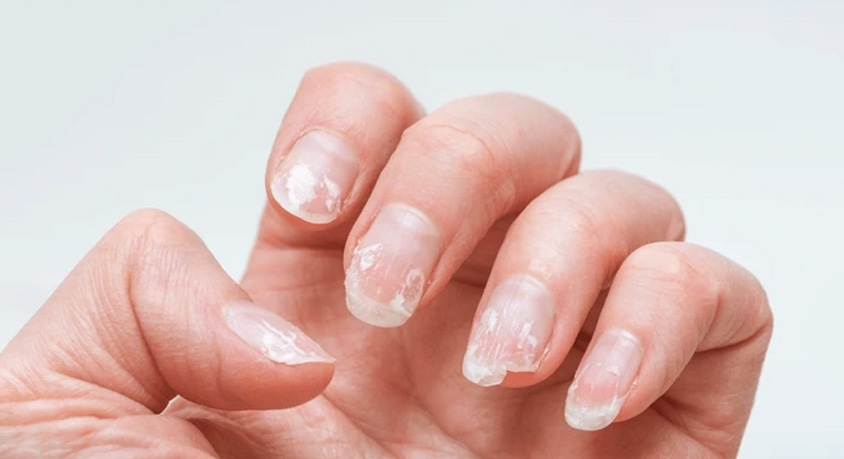
You look down at your fingernails and notice tiny white dots scattered across the surface. Some are pinhead-sized. One or two are larger. Your first thought, probably fed by something a relative told you years ago, is that you need more calcium. You start drinking extra milk or crushing calcium supplements into your smoothie. Weeks pass. The white spots grow out slowly, but new ones appear. You feel confused and a little cheated.
Let me clear this up immediately. Those white spots are medically called leukonychia punctata. They have nothing to do with your calcium levels. In fact, calcium deficiency almost never presents as white spots on nails. True calcium deficiency causes muscle cramps, numbness, and brittle bones, not nail discoloration. The persistent myth comes from an old misunderstanding about “white” meaning “lacking” and nails needing calcium to be hard. But your nails are made of keratin, not calcium.
So what actually causes those spots? In the vast majority of cases, they are the result of minor trauma. You bumped your finger against a doorframe two weeks ago and forgot about it. You caught your nail on a zipper. You pressed too hard while cleaning under the nail. You even played a rough game of catch. That trauma disrupts the nail matrix—the hidden factory under your cuticle where new nail cells are formed. As the nail grows out, the damaged area shows up as a white spot. By the time you see it, the injury is long healed. This is like finding a bruise on your arm and not remembering the bump.
A 2015 study in the Journal of Clinical and Aesthetic Dermatology reviewed over 200 cases of leukonychia and found that trauma accounted for nearly 75 percent of cases in healthy adults. The remaining cases were linked to allergies, certain medications, or fungal infections. Only a tiny fraction, less than 3 percent, were associated with nutritional deficiencies—and those deficiencies were zinc or protein, never calcium.
The zinc connection is worth paying attention to. Severe zinc deficiency can cause horizontal white bands across multiple nails, not scattered dots. This condition is called Mee’s lines. It is rare and usually appears alongside other symptoms like hair loss, slow wound healing, or loss of taste. A simple blood test can check your zinc levels. But if you only have a few dots here and there, and you feel otherwise healthy, you do not need a supplement.
Here is the counterintuitive part. Trying to “treat” these spots by taking extra calcium or applying nail hardeners can actually make your nails more brittle. Hard nails are more likely to crack rather than flex under impact. Flexing is what prevents deep trauma. A healthy nail bends slightly, absorbs the force, and may produce a harmless white spot instead of a vertical split. Those white spots are a sign that your nail did its job protecting the sensitive nail bed. They are not a sign of weakness.
What about the white spots that do not grow out? A healthy fingernail grows about three millimeters per month. A white spot near your cuticle will take about four to six months to reach the free edge and be trimmed off. If a white spot stays in the same place without moving, or if it changes shape or color, that is a different condition. Persistent white patches that do not grow out could be a fungal infection called superficial white onychomycosis. That requires an antifungal treatment, not a change in diet.
I remember a violin teacher named Helen who came to me worried about her nails. She had multiple white spots and was convinced she had osteoporosis. She had been taking high-dose calcium for six months, with no change in her nails. We looked at her hands together. She demonstrated how she taps her fingernails against the violin fingerboard during practice. That tapping was the trauma. Once she understood that, she stopped the unnecessary calcium and started wearing light cotton gloves during practice breaks. Her white spots continued to appear occasionally, but she no longer panicked. She even named them her “practice badges.”
If you have white spots on your nails right now, here is what you actually need to do. Nothing. Really. Wait two weeks and watch them move slowly toward the tip of your finger. That movement proves they are just old trauma growing out. If you want to reduce future spots, protect your nails from repeated minor impacts. Wear gloves when gardening or lifting weights. Keep your nails trimmed short so they do not catch on things. Eat a balanced diet with adequate protein and zinc from foods like meat, shellfish, nuts, and seeds. But stop blaming your dairy intake. Your nails are not a window into your calcium levels. They are a timeline of your recent adventures. Every white dot is a tiny story. And most stories are harmless.
Disclaimer: Mention of any brand or trademark is for identification only and does not imply partnership or endorsement