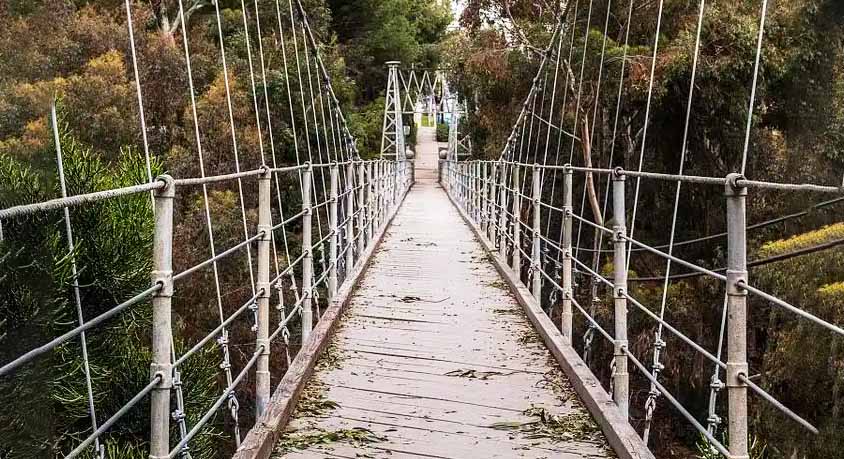
The metal cables groaned under my weight, a low, rhythmic vibration that traveled straight up through the soles of my boots as I took a tentative step toward the center of the span. Below me, the forest floor of the canyon was a deep, shadowed green, obscured by a dense canopy of ferns and ancient eucalyptus trees that seemed to completely swallow the sounds of the nearby Bankers Hill neighborhood. I gripped the railing, which swayed with a life of its own, watching a hawk circle silently through the narrow gap between the steep valley walls. It was a moment of dizzying suspension, a silent anchor in a city that usually demands you spend your time and money at the loud, crowded coastal resorts.
Crossing the Spruce Street Suspension Bridge feels like you are trespassing on a private slice of wilderness that the guidebooks simply forgot to include in their Top 10 lists. Most people visiting San Diego are funneled toward the zoo or the overpriced restaurants in the Gaslamp Quarter, paying a premium for the privilege of being near other tourists. I reached the bridge by walking through a quiet, unassuming residential street where the only sound was the distant hum of a lawnmower, not the cacophony of a tour bus engine. There is no entrance fee, no gift shop selling overpriced plastic trinkets, and no guided group waiting for you to finish your photos; it is just a piece of local infrastructure that happens to offer one of the most exhilarating views in Southern California.
Dinner in this part of the city is a masterclass in avoiding the "convenience tax" that ruins so many travelers' budgets. I stopped at a local deli just a few blocks from the canyon, grabbing a massive, locally sourced turkey club for twelve dollars, then walked to a nearby grassy lookout to eat. If you sit at the restaurants facing the harbor, you are essentially paying an extra fifteen dollars just to be looked at by other tourists, while the actual food remains average at best. In the residential pockets, the local joints cater to people who live here, which means you get better ingredients, larger portions, and prices that haven't been inflated to support a "scenic view" surcharge.
Finding a place to stay that doesn't involve emptying your savings account requires you to look for the smaller, non-chain lodges tucked into the city's older neighborhoods. I secured a mid-range room in a bungalow-style inn for roughly 160 dollars a night, which was a steal compared to the 400-dollar-a-night resort rooms that charge an additional "destination fee" for the use of a pool you don't have time to swim in. Because I wasn't staying in the middle of the tourist grid, I avoided the need to pay for valet parking or ride-sharing everywhere I went. I walked the neighborhoods, used the trolley system to reach the waterfront when I needed to, and discovered that the best experiences in San Diego happen in the gaps between the major landmarks.
Exploring the nearby canyons—like the ones adjacent to the bridge—provides a level of quiet reflection that is rare in such a high-traffic destination. I spent an afternoon wandering the Florida Canyon trails, which are free and feel worlds away from the manicured parks that typically define the city experience. These are not curated tourist paths; they are raw, winding tracks that give you a sense of the land’s original terrain. When you realize that the most profound experiences don't come with a ticket, you start to see the city as a living, breathing place rather than just a collection of attractions to be checked off a list.
Traveling to this part of the country between March and June offers the best chance to avoid the mid-summer coastal fog that can occasionally dampen the experience. Flying in from the East Coast involves a five-to-six-hour trek, but the transition from a cold, damp spring to the bright, dry warmth of Southern California is a genuine physical relief. The city is manageable and rarely feels truly overwhelming if you know how to zig while the crowds are zagging toward the beach. I found that if I was on the bridge by 7:00 AM, the light was perfect, the air was crisp, and I was the only person for miles, creating a temporary, solitary sanctuary in the middle of a bustling metropolitan area.
San Diego is far more than just its beaches and its zoo, but you have to be willing to look past the neon signs to find its real personality. The best adventures are often hidden in the places where the locals have stopped looking and the tourists have never arrived.
Disclaimer: Mention of any brand or trademark is for identification only and does not imply partnership or endorsement