


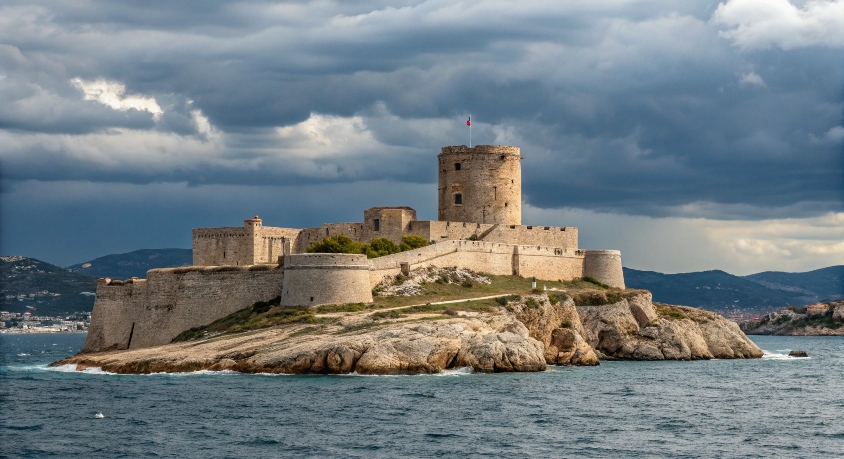
As I stepped off the ferry and made my way towards the Château d'If, I could feel a sense of excitement building within me. This castle, located on Île d'If in the Frioul Archipelago, has captured the imagination of countless visitors. Its historical significance, paired with the connection to The Count of Monte Cristo, only added to its allure. The journey to the island was a short ride from the bustling port of Marseille, and as we got closer, the impressive fortress began to rise before me against the backdrop of the shimmering Mediterranean Sea.
The first thing that caught my eye as I approached the island was the ruggedness of the landscape. The Château d'If is perched on a small, rocky island, surrounded by deep blue waters. It almost seemed to stand guard over the sea, watching the waves crash against its ancient stone walls. The castle’s towering structure looked even more imposing as I stood at the base, taking in its sheer size. The thick walls, made from local limestone, have withstood centuries of wind and salt from the sea. I could almost imagine how it must have felt to be locked away in one of its dark cells, isolated from the world.
Walking through the narrow pathways of the castle, I was struck by the blend of medieval and Renaissance architecture. The tall, narrow windows let in just enough light to create an eerie atmosphere in the stone rooms. Some of the rooms were simple, while others were more elaborately designed. I could see that the castle had been both a fortress and a prison, with its walls designed to keep invaders out and prisoners in.
The history of the Château d'If dates back to the 16th century. It was originally built as a fortress to protect the port of Marseille from potential threats coming from the sea. The location was perfect for such a purpose, sitting on an island just a short distance from the mainland. The castle’s strategic position allowed it to keep a close eye on the waters around it. But over time, it became known for something entirely different – as a prison.
As I walked through the halls, I could almost hear the echo of footsteps from centuries past. The cells were small, dark, and bare, with just enough room for a bed and a few belongings. It was hard to imagine how someone could endure such isolation for so long. The castle is most famous for being the place where Edmond Dantès, the protagonist of The Count of Monte Cristo, was wrongly imprisoned. He spent 14 long years in the castle’s dungeons before finally escaping and seeking revenge. This story has helped to shape the castle’s legacy, making it a symbol of resilience and hope. Even though the real history of the Château d'If is somewhat different, it’s easy to see why the novel has become so closely tied to this place.
The museum inside the castle offered a deeper look into the history of the fortress and the role it played in the region. I was fascinated by the displays showing the castle’s evolution over the centuries, from its military beginnings to its use as a prison. There were also exhibits about the people who had been imprisoned there, with a focus on the famous literary figure, Edmond Dantès. Some of the exhibits included old letters and maps that provided a glimpse into life during the time the castle was in use.
After exploring the castle’s interior, I made my way to the roof. From there, the view was absolutely breathtaking. The vast Mediterranean stretched out before me, its waters sparkling under the sun. I could see the entire city of Marseille in the distance, with its colorful buildings lining the coast. The contrast between the rocky island and the calm, expansive sea was striking. The view reminded me of the castle’s original purpose – to keep watch over the port and the surrounding waters.
As I stood there, the gentle breeze from the sea blew through my hair, and I felt a sense of peace that was in stark contrast to the harsh history of the castle. I could see why this location was chosen to be a fortress, with its clear sightlines and natural defenses. The beauty of the place was undeniable, and I found myself standing there for a long time, just taking it all in. It was hard to believe that this place, which seemed so peaceful now, had once been a prison for many.
While the Château d'If itself was the main attraction, the island also had its own charm. The small island is mostly rocky, with little vegetation, but the views from various points were stunning. There were paths that led around the island, giving me a chance to explore the natural beauty of the place. The sea on one side of the island was calm, while the other side faced stronger currents, adding to the sense of mystery and power that surrounded the fortress.
I walked along the paths, taking in the quietness of the island. There were only a few other visitors, so it felt like a private experience. The sound of the waves crashing against the rocks provided a soothing soundtrack as I wandered along. The contrast between the stillness of the land and the movement of the sea reminded me of the centuries of history that had unfolded on this island.
What made this visit even more exciting for me was the connection to The Count of Monte Cristo. I had read the book years ago, and now, standing in the very place where Edmond Dantès had been imprisoned, I felt like I was walking through the pages of the novel. Although the real history of the castle differed from the events in the book, I couldn’t help but feel connected to the famous story. The castle’s dark, imposing walls seemed to whisper the tale of betrayal, escape, and revenge. It was easy to imagine the famous scene where Dantès plans his escape from his dark cell, looking out at the sea as he dreams of freedom.
The Château d'If is a place that offers much more than just history. It is a place of legend, where fact and fiction come together to create an unforgettable experience. Whether you are interested in history, literature, or simply the beauty of the Mediterranean, this castle offers something for everyone. The combination of the fortress’s past, its stunning views, and its connection to a famous literary work makes it one of the most unique destinations I have ever visited.
Disclaimer: Mention of any brand or trademark is for identification only and does not imply partnership or endorsement