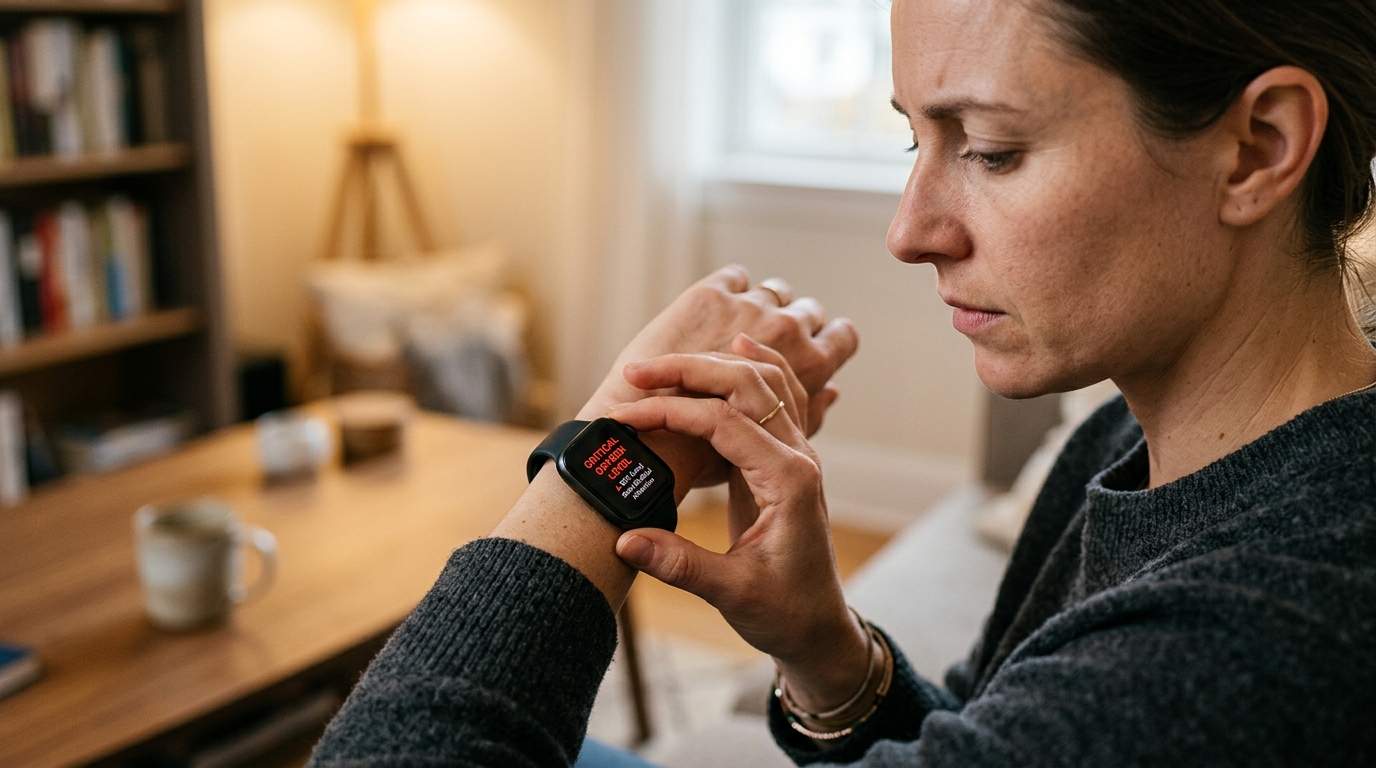

"Your heart rate must hit 180 during exercise to be effective!" Have you often heard such advice while working out? Many people mistakenly believe that the faster the heartbeat, the better the workout results. However, is this really true? What is the optimal heart rate to maintain during exercise?
One of the simplest methods to measure heart rate is by feeling and counting the pulse. The normal resting heart rate for adults is 60 to 100 beats per minute, and the heart naturally beats faster during exercise. But everyone's heart rate has a theoretical "maximum limit" or "warning line," professionally known as the "maximum heart rate."
A simple formula can help you estimate it: Maximum Heart Rate = 220 - Age. For example, if you are 40 years old this year, your maximum heart rate is approximately 220 - 40 = 180 beats per minute. This means that if your heart rate consistently exceeds this value during exercise, your heart may be under excessive strain, even increasing the risk of cardiovascular disease. So, this is not just a number; it's an important safety line.
Now that we know the safety upper limit, how should we exercise to be truly effective? The answer lies in finding your "target exercise heart rate." This is a heart rate range that allows the heart to work both safely and efficiently. The calculation formula is also simple: Target Exercise Heart Rate = (220 - Age) × (60% ~ 85%).
Taking a 40-year-old adult as an example: their estimated maximum heart rate is 220 - 40 = 180 beats per minute; the lower limit of the target heart rate zone is 180 × 60% = 108 beats per minute; the upper limit is 180 × 85% = 153 beats per minute. This means that during exercise, if their heart rate can be maintained between 108 and 153 beats per minute, it is a range that is both safe and provides good exercise benefits. If the heart rate is too low, the exercise effect is poor; if the heart rate is too high, it may enter an anaerobic state, increasing risk and causing intense fatigue. Therefore, learning to pay attention to your heart rate during exercise ensures that every drop of sweat is shed with clear purpose.
We often talk about "low-intensity exercise," "moderate-intensity exercise," and "high-intensity exercise." How is intensity defined? The greater the exercise intensity, the more pronounced the heart's response to the exercise stimulus and the faster the heart rate. Therefore, the classification is primarily based on heart rate.
Low-intensity exercise: Has a relatively small stimulating effect on the body. The measured heart rate during exercise generally does not exceed 100 beats per minute, such as walking.
Moderate-intensity exercise: Provides a moderate level of stimulation to the body. The heart rate during exercise is typically between 100 and 140 beats per minute, such as brisk walking, jogging, cycling, Tai Chi, and tennis doubles.
High-intensity exercise: Provides a greater stimulating effect on the body and can further improve fitness results. The heart rate during exercise exceeds 140 beats per minute, such as running, fast cycling, fast-paced aerobics, fast hiking, stair climbing, and tennis singles.
Here's the key point: how to find the exercise intensity suitable for you?
People with good exercise habits and good physical fitness can engage in high-intensity and moderate-intensity exercise.
People with some exercise habits and relatively good physical fitness can adopt moderate-intensity exercise.
Beginners participating in physical fitness activities or those with weaker physical condition can engage in moderate or low-intensity exercise.
Be sure to be vigilant if these "abnormal signals" appear in your heartbeat.
I. When the heartbeat is too fast: These types of "fast" are dangerous.
1. Supraventricular Tachycardia. Characteristics: Heart rate suddenly increases to 150-250 beats per minute, starts and stops abruptly. During an episode, it feels like the heart is "jumping out."
Risks: Although mostly not directly fatal, it can lead to low blood pressure, fainting, and affect quality of life. A few types may deteriorate into more dangerous arrhythmias.
2. Atrial Fibrillation (AFib). Characteristics: The heart beats irregularly and "quivers," with a fast and irregular heart rate, sometimes fast, sometimes slow.
Risks: Palpitations, shortness of breath, fatigue; increased risk of stroke because blood is prone to form clots in the atria.
3. Ventricular Fibrillation (VFib). Characteristics: The ventricles quiver ineffectively and cannot pump blood. The patient can die within minutes.
Risks: This is the primary cause of sudden cardiac death. Cardiopulmonary resuscitation (CPR) and electrical defibrillation must be administered immediately.
II. When the heartbeat is too slow: These types of "slow" require caution.
1. Sick Sinus Syndrome. Characteristics: The function of the heart's sinoatrial node declines, leading to an excessively slow heart rate.
Risks: Persistent fatigue, dizziness; in severe cases, "blackouts" and fainting; may suddenly experience prolonged heart pauses (>3 seconds). Usually requires a pacemaker implantation.
2. High-grade Atrioventricular Block. Characteristics: A malfunction in the heart's "electrical conduction system" where signals from the atria are not fully transmitted to the ventricles.
Risks: The ventricles may produce a very slow and unreliable rhythm (30-40 beats per minute), and the heart may stop at any time.
3. Drug-induced Excessive Slowing: Certain heart disease medications may excessively slow the heart rate, requiring a doctor's adjustment of the dosage.
When facing changes in heart rate, remember one core principle: Symptoms are more important than numbers!
Regardless of whether the heart rate is fast or slow, seek medical attention immediately if the following symptoms occur:
1. Palpitations accompanied by chest pain or difficulty breathing;
2. Dizziness, blacking out, or even fainting;
3. Extreme fatigue, unexplained weakness;
4. Irregular heartbeat, a feeling of "skipped beats" or "chaotic beats."
Disclaimer: Mention of any brand or trademark is for identification only and does not imply partnership or endorsement