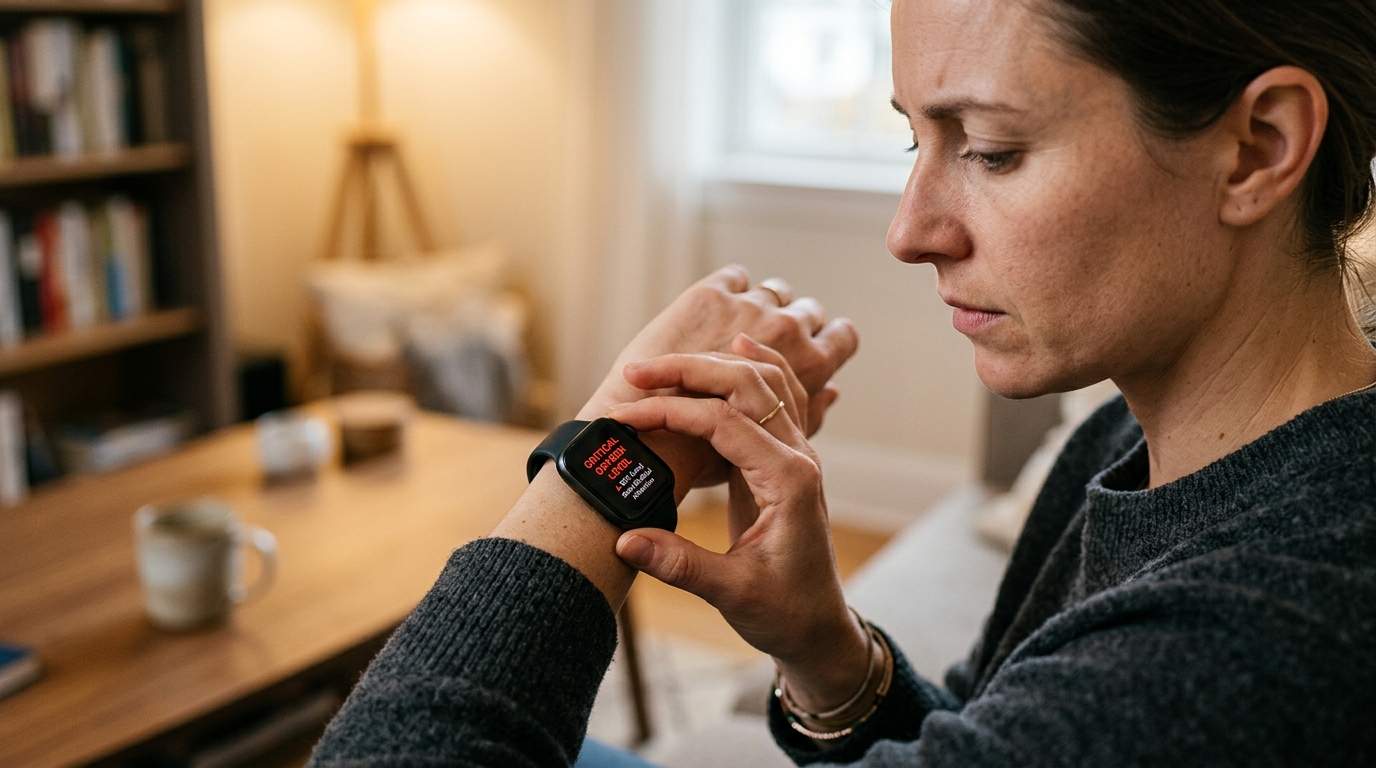
Your wrist just buzzed. The smart gadget you bought for "peace of mind" now flashes a stark warning: "irregular heart rhythm." Or perhaps "critical blood oxygen" for the third time, despite you feeling perfectly normal. That knot in your stomach? That's the ironic side effect of what was supposed to be proactive health.
We invested in these devices for a reason. The promise was clear: early detection, a personal health guardian, data-driven wellness. Miniaturized sensors on your skin, fueled by sophisticated algorithms and AI, were supposed to spot trouble before it escalated. This is the commercial value proposition of IoT health monitoring: turning passive observation into actionable insights, driving efficiency in personal health management.
But here’s the stark reality. That mountain of personal health data often generates more confusion than clarity. Are we genuinely detecting precursors to serious conditions, or are we simply becoming a new generation of "digital hypochondriacs," obsessing over perfectly normal physiological variations that a sensitive algorithm flags as "abnormal"?
Consider the AI's "interpretations." These systems are trained on vast datasets, identifying patterns. Yet, a doctor's diagnosis involves context, medical history, physical examination, and clinical judgment – elements a wrist-worn device cannot replicate. An alert, however urgent its tone, is a data point, not a diagnosis. To implicitly trust these urgent alerts, especially when they contradict how you feel, risks over-medicalization or, worse, diverting attention from a genuinely developing issue that falls outside the algorithm's scope.
Beyond the immediate anxiety, there's the unseen burden: personal health data privacy. Every heartbeat, every step, every minute of sleep is collected, stored, and analyzed. Who owns this intensely personal data? How secure is it? The industry's race for innovation often outpaces robust data governance and user control, creating vulnerabilities that are rarely discussed until a breach occurs.
The fundamental challenge isn't the technology itself, but our relationship with it. These devices are tools, powerful ones, but tools nonetheless. They offer supplementary data. They do not replace professional medical advice. A "poor sleep quality" alert, for instance, might simply mean you moved more in your sleep, not that you're developing a chronic condition requiring immediate intervention.
So, when your wearable tech yells "warning," don't panic. Take a breath. Consider the context. Do you feel unwell? Are there other symptoms? If concerns persist, consolidate the data, and consult a medical professional. Use the device's information as a talking point, not as a definitive diagnostic statement.
These devices are transforming how we engage with our health, for better and for worse. The true value lies not in passive obedience to every alert, but in critically interpreting the data and understanding its limitations.
Disclaimer: Mention of any brand or trademark is for identification only and does not imply partnership or endorsement