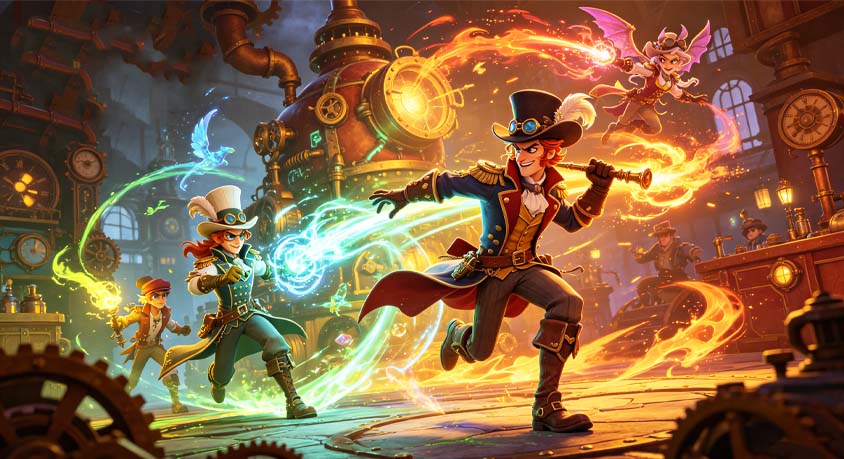
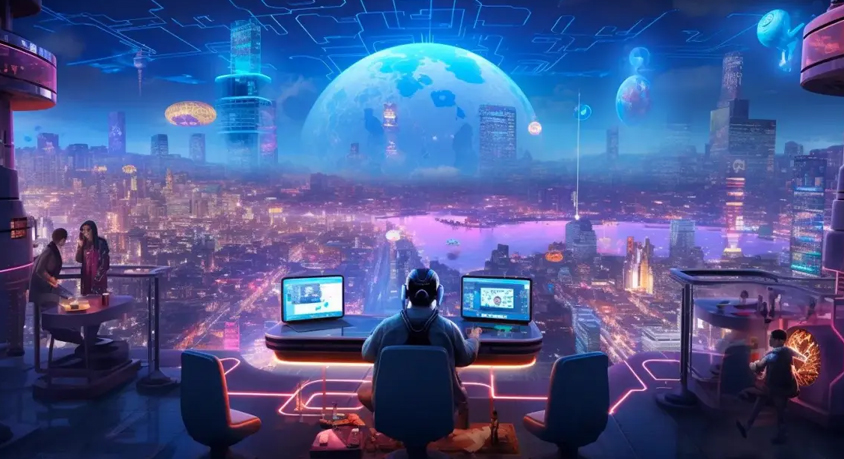
My friend Eli works as a game AI engineer, and when I first asked him what he does, I joked, “Oh, so you’re the one making zombies chase me in Resident Evil?” He rolled his eyes and pulled up his laptop: a clip of an RPG he’d worked on, where a café worker smiled and said, “Hey, Chloe—still into that spiced hot apple drink you loved last month?” I froze. “Wait, how did she…?” “AI,” he said. “She remembers player choices—what you order, who you help, even the jokes you tell. That’s my job—not just making enemies. Making the game feel like it knows you.” That’s the big myth about game AI: most people think it’s just “bad guys with better aim.” But Eli and his team? They’re using machine learning to turn games from static worlds into something that adapts, reacts, and feels weirdly human.
Let’s start with the NPCs—those non-player characters you chat with, buy from, or quest for. Back in the day, NPCs were like broken vending machines: they spouted the same lines, did the same things, no matter what you did. Now? Eli’s team built an NPC for a fantasy game that learns your playstyle. If you’re a peaceful player who avoids fighting, the blacksmith might offer you a tool to disarm enemies instead of a sword. If you’re always helping villagers, the mayor might give you a secret shortcut to a quest. “We had a player message us saying the NPC felt like a real friend,” Eli said. “They’d log on just to chat about their day. That’s when I knew we’d nailed it.” It’s not magic—machine learning lets the AI analyze tiny bits of data (what you click, who you talk to, even how long you linger in the café) and tweak its behavior. Suddenly, NPCs aren’t just “background noise”—they’re part of the story.
Then there’s personalized content—AI that builds the game for you, not the other way around. Eli worked on a farming sim last year where the AI noticed a player spent 80% of their time growing sunflowers. So it added a sunflower festival: villagers decorated the town, a merchant showed up selling sunflower seeds, and a quest to grow the tallest one. “The player posted a TikTok crying because it felt like the game ‘got’ their obsession,” Eli laughed. Another example: a racing game that adjusts track difficulty based on how you drive. If you’re a newbie, it smooths out sharp turns and adds guide rails. If you’re a pro, it throws in rain or oil slicks to keep you on your toes. You won’t even notice the AI’s hand—you’ll just think, “This game is perfect for me.” That’s the goal: AI that fades into the background, making the game feel tailor-made without you realizing why.
The least glamorous (but most important) job? AI for balance testing. Imagine a MOBA with 50 heroes—testing if each one is “fair” used to take devs weeks, playing thousands of matches. Now, Eli’s AI can run 10,000 simulations in a day, spotting if a new hero is too strong (like one that could one-shot enemies) or too weak (like one no one ever picked). “We had a hero that was breaking the game—players were quitting because she was unbeatable,” Eli said. “The AI flagged her in 2 hours, showed us exactly what was wrong (her ultimate ability did 30% too much damage), and we fixed it before launch.” It’s not just about fairness—it’s about saving time. Devs get to focus on making the game fun, while AI handles the boring, repetitive work of “does this break everything?”
Here’s the tea: game AI engineers aren’t “making machines take over games”—they’re making games more human. Eli once spent a week tweaking an NPC’s laugh because players said it felt “too robotic.” He tested 20 different tones until it sounded warm, not forced. “People forget AI is built by people,” he said. “We’re not just coding—we’re trying to make players feel seen.” Last month, he showed me a new project: an AI that writes small, personalized side quests based on your in-game choices. “A player who saves a cat might get a quest to find its owner,” he said. “A player who steals might get a quest to outrun a guard. It’s all about making the game feel alive.”
Next time you’re playing a game and think, “How did it know I wanted this?”—thank an AI engineer. They’re the ones turning static lines of code into something that reacts, adapts, and wows you. And no—they’re not just the people making zombies chase you. They’re the people making the game feel like it’s glad you’re there.
Disclaimer: Mention of any brand or trademark is for identification only and does not imply partnership or endorsement