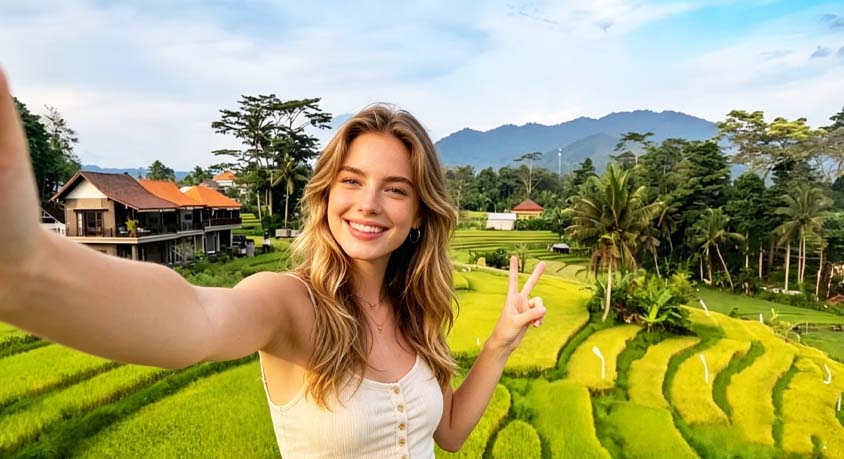
The sound of a distant temple bell cut through the morning mist as I stood on a bamboo balcony, looking out over a valley that seemed to be painted in fifty different shades of neon green. Below me, a river rushed over volcanic stones, and the only other person in sight was a farmer leading two ducks through a flooded rice paddy. I had just spent a week in Seminyak, where I was paying fifteen dollars for a mediocre avocado toast while dodging swarms of motorbikes and influencers in floral dresses. Now, three hours away in the village of Sidemen, I was paying twenty dollars a night for a private villa that overlooked the majestic Mount Agung. It felt like I had found a glitch in the travel industry's matrix—a place where the "Bali spirit" hadn't been packaged and sold for a 500% markup yet.
If you’re still following the Instagram trail to the "famous" swings and nests in Ubud, you’re essentially paying a thirty-dollar entrance fee to wait in line for an hour just to sit on a piece of wood for thirty seconds. In Sidemen, I walked out of my guesthouse and followed a dirt path that wound through the rice terraces. A local man carrying a bundle of grass waved me over and pointed out a hidden trail leading to a waterfall. There was no ticket booth, no "photo spot" sign, and no guy with a clipboard. I spent the afternoon swimming in a cold, clear pool with nothing but the sound of the jungle for company. The cost of this world-class experience? A polite smile and a "Suksma" to the farmer who showed me the way.
The food situation in the popular tourist hubs has become a joke for anyone who actually cares about their bank account. You see "local" warungs charging ten dollars for a Nasi Goreng because they have fairy lights and a trendy name. Here, I sat at a wooden table in a tiny family-run kitchen where the grandmother was literally pounding the spices in a stone mortar. I had a feast of smoked duck, spicy sambal, and fresh vegetables for about four dollars. When I asked for the bill, I almost felt guilty for how little it was. The owner sat with me for a bit, explaining that most travelers are too afraid to leave the main road, so they never realize that the best food in Indonesia is usually found behind a curtain of steam in a place with no reviews on Google.
One of the most annoying misconceptions about "luxury" travel is that you need to stay in a five-star international hotel chain to get a good view. In this valley, I found that the smaller the guesthouse, the better the experience. I stayed in a traditional bamboo structure built by local craftsmen. It didn't have central air conditioning, but with the mountain breeze and the scent of frangipani flowers, I slept better than I ever did in a sterilized hotel room. If you’re paying three hundred dollars a night for a room in a concrete block just because it has a famous logo, you’re being scammed by your own need for "safety." The real luxury is being able to hear the frogs at night instead of the neighbor's TV through a thin wall.
Traveling during the rainy season is another "trap" that keeps people away, but it’s actually the smartest move for a budget traveler. Yes, it might pour for two hours in the afternoon, but that’s when the jungle truly comes alive, and the prices for everything—from scooters to rooms—drop by nearly half. I spent one rainy afternoon sitting in a small cafe, watching the clouds roll over the mountains like a slow-motion movie. The air was cool, the dust was gone, and I didn't have to fight a single soul for a seat at the table. If you’re obsessed with "perfect" weather, you’re going to pay a "perfect" price, which usually involves being surrounded by thousands of other people with the same idea.
The true cost of travel isn't just the money you spend; it’s the peace of mind you lose when you’re constantly being treated like a walking ATM. In the hidden valleys of East Bali, people still look you in the eye instead of looking at your wallet. You can spend your entire vacation paying for the "idea" of a tropical paradise in a crowded beach town, or you can take a chance on a place where the roads are narrow and the wifi is spotty. I’d rather have a weak signal and a strong connection to the world around me any day of the week.
Disclaimer: Mention of any brand or trademark is for identification only and does not imply partnership or endorsement