
There is a certain comfort in routine. Every evening, as the sun softens into the gold of late afternoon, we see them: the dedicated owners, leash in hand, taking the same loop around the same quiet block. It is a ritual of care, a moment of connection between human and animal. It is also, for the human half of that pair, a deeply misleading signal of health. We tell ourselves that we are being active, that we are clearing our heads, that we are doing something good for our bodies. And we are, to a point. But if your vision of long-term cognitive health relies solely on these gentle, ambling walks, recent neuroscience suggests you may be walking directly into a trap.
The fear of losing one’s mind—of facing the slow, foggy descent of Alzheimer’s disease—is a uniquely potent anxiety in modern American life. We watch our parents age, we read the statistics, and we silently plead with our own brains to remain sharp. This fear has driven a massive popular interest in the concept of neuroplasticity, the idea that we can build cognitive reserve, that we can, like a diligent gardener, tend to the synapses and keep them blooming. The common prescription, the one we all nod along to, is to "use your brain." Do crossword puzzles. Play cards. Learn a language. Keep those mental gears turning. This advice, while well-intentioned, tells only half the story, and it might just be the less important half.
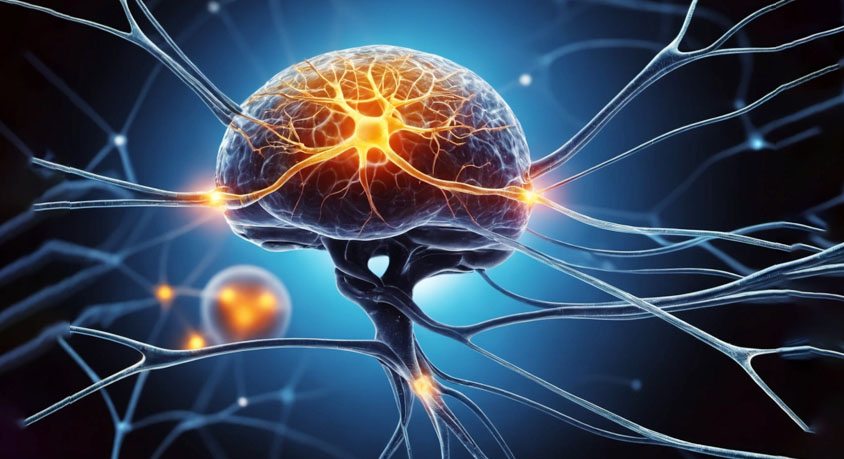
To truly understand how to save our neurons, we must first understand what feeds them. There is a protein, a kind of miracle-grow for the brain, called Brain-Derived Neurotrophic Factor, or BDNF. Think of it as a fertilizer. It protects existing neurons, encourages the growth of new ones, and strengthens the connections between them. Low levels of BDNF are strongly linked to neurodegenerative diseases, including Alzheimer's. The question then becomes not just how to use the brain, but how to trigger the production of this essential protein. And this is where the quiet, gentle habits fail us. While sitting at a bridge table engages the mind, it does little to spike BDNF levels. What does? The answer, emerging from lab after lab, is aerobic exercise. Moving our bodies vigorously enough to raise our heart rate and break a sweat is currently one of the most potent, scientifically validated ways to flood our system with this neural fertilizer. You are not just walking the dog; you are potentially missing the window to dose your hippocampus with what it needs to survive.
This leads us to a more sophisticated, and frankly more interesting, question. If a jog is good, is any movement that gets the heart pumping enough? The cutting-edge research suggests we can do even better. The brain, it turns out, thrives on complexity. It craves novelty and coordination. The most powerful cognitive workouts combine the aerobic boost—the BDNF shower—with a cognitive challenge. This is where the concept of "complex movement" enters the picture. Activities that demand hand-eye coordination, split-second decision-making, and strategic thinking while the heart is racing appear to create a synergistic effect. They don't just feed the neurons; they wire them together in real-time, building richer, more resilient networks.
This brings us, perhaps surprisingly, to the pickleball court. You have seen the phenomenon, the courts popping up in parks and retirement communities across the country. It is easy to dismiss it as a social fad, a gentler version of tennis for the leisure class. But if we look at it through the lens of neuroscience, its popularity is not just a trend; it is a biological imperative. Pickleball is a masterclass in complex movement. It is aerobic, certainly, with quick bursts of lateral shuffling and rapid volleys. But it also requires you to track a small ball, adjust your paddle angle, anticipate your opponent’s move, and decide in a split second whether to drop a dink or go for a drive. It is, in essence, a high-intensity interval training session for the prefrontal cortex, all while the body is pumping out a fresh batch of BDNF. The same logic applies to dancing, where you must remember steps and move in sync with a partner, or table tennis, where the speed of the ball forces rapid, reflexive calculation.
So, as you lace up your shoes this evening, consider for a moment what you are asking of your brain. Is a gentle stroll enough to build the cognitive reserve you will need in two decades? Perhaps. But the emerging science invites us to be more ambitious. It asks us to view our brains not as a machine that simply needs to be kept busy, but as a garden that needs both rich fertilizer and constant, varied cultivation. It is not about abandoning the dog, but about finding moments to also play a game that makes you think, react, and laugh while your heart pounds in your chest. The path to a sharper future may not be a straight line at all. It might be a rally, a dance, a game.
Disclaimer: Mention of any brand or trademark is for identification only and does not imply partnership or endorsement