If you've ever sat in a 20-minute line at Costco to save $0.30 per gallon on gas, feeling a small victory as you filled your tank, yet stared at your brokerage account during a market correction and felt paralyzed—unable to buy more at a discount—you have experienced one of the most powerful and costly contradictions in human psychology. Most people believe their financial decisions are rational, based on cold calculations of value. They are wrong. Your brain is wired to treat the same economic opportunity—buying something at a lower price—completely differently depending on whether it's a consumable good or a financial asset. This wiring, honed over millennia, is now actively working against your wealth. Let's dissect the neuroscience of the pump and the portfolio.
Start with the gas station. When you see prices drop, your brain's reward centers light up. You're getting a tangible, immediate benefit: the same 15 gallons now costs you $4.50 less. The saving is concrete, instantaneous, and you feel it in your wallet that week. This is a realized gain, and your brain loves it. You feel smart, efficient, and victorious. You'll gladly wait 20 minutes to collect that $4.50 dopamine hit.
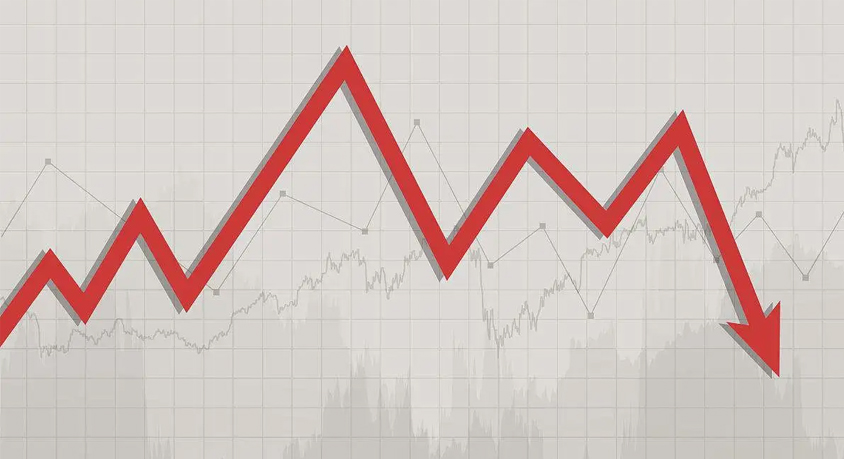
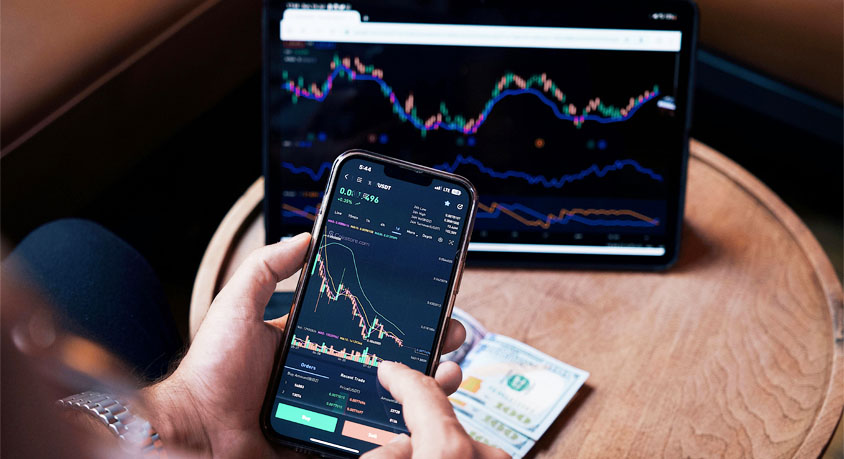
Now, walk over to your brokerage app. The S&P 500 has dropped 20%. A diversified basket of the world's greatest companies is on sale. Logically, this is the same opportunity as cheap gas: buying the same thing for less money. But your brain doesn't see it that way. It sees loss. Seeing your portfolio value drop triggers the amygdala, the brain's fear center. The pain of that paper loss is, according to Nobel Prize-winning psychologist Daniel Kahneman, about twice as powerful psychologically as the pleasure of an equivalent gain . This is loss aversion in its purest form. The thought of buying more feels like throwing good money after bad. You freeze. You wait. You miss the opportunity.
This asymmetry has a name in behavioral finance: the "endowment effect" combined with "mental accounting." You treat your portfolio not as a collection of assets to be acquired opportunistically, but as an extension of your identity. A drop feels like a personal failure. Gasoline, on the other hand, is just a consumable. It has no emotional baggage.
The numbers tell a stark story. The average investor, driven by these emotions, has consistently underperformed the very assets they own. According to DALBAR's annual study, the average equity investor underperformed the S&P 500 by nearly 5% annually over the past 30 years, largely due to buying after rallies and selling during dips—the exact opposite of the gas-station logic . They panic-sell at the bottom and FOMO-buy at the top. The gas-station warrior, who would never pay full price for fuel, becomes a "portfolio chump" who pays full price for stocks and sells them at a discount.
This is where the master's mindset must override the monkey brain. The master understands that a market correction is not a loss; it's a sale. They reframe the 20% drop as "Stocks are 20% off." They ask not "Why is my portfolio down?" but "What would I have done six months ago if someone offered me the chance to buy these same companies at today's prices?" The answer, almost always, is "I would have bought aggressively."
The psychological trick is to separate the asset from the price. The asset is the company, the stream of future earnings, the productive capacity. The price is just today's quote. When the price drops and the asset remains sound, your opportunity improves. This is the core insight of value investing, but it's also a behavioral hack. By focusing on the asset's long-term value, you dampen the emotional response to the price's short-term volatility.
So, what is the actionable framework to rewire your brain and treat portfolio discounts with the same enthusiasm as gas discounts? I advise you to stop checking your portfolio price and start thinking in terms of "accumulation units." Here is a three-part Behavioral Finance Fix for 2026.
First, automate your investing completely. Set up automatic contributions to your 401(k) and IRA that happen every payday, regardless of what the market is doing. This is dollar-cost averaging, and it's the ultimate defense against your own emotions . You buy more shares when prices are low, fewer when they're high, and you never have to make a decision. The system does the work, and your emotional brain is taken out of the equation. Studies show that automated investors earn significantly higher returns than those who try to time the market .
Second, create a "buy signal" checklist, not a "panic" checklist. When the market drops 10%, don't open your brokerage app in fear. Instead, open your pre-written checklist. It should say: "1. Has the fundamental thesis for my core holdings changed? 2. Do I have cash available in my emergency fund (beyond 6 months of expenses) to deploy? 3. If I didn't own these stocks, would I buy them at today's prices?" If the answer to #1 is "no" and #3 is "yes," you have a clear signal to buy. This checklist turns a moment of panic into a moment of planned action.
Third, reframe your portfolio in terms of "shares owned," not "dollar value." This is a subtle but powerful mental shift. Instead of thinking "My portfolio is worth $200,000," think "I own 500 shares of VTI." When the price drops, you don't lose shares; you actually gain the ability to acquire more shares for the same dollar contribution. Your goal is to accumulate as many shares as possible over your lifetime. Share count is what matters; the price is just the entry ticket. This reframing turns a price drop from a threat into an opportunity.
Disclaimer: Mention of any brand or trademark is for identification only and does not imply partnership or endorsement