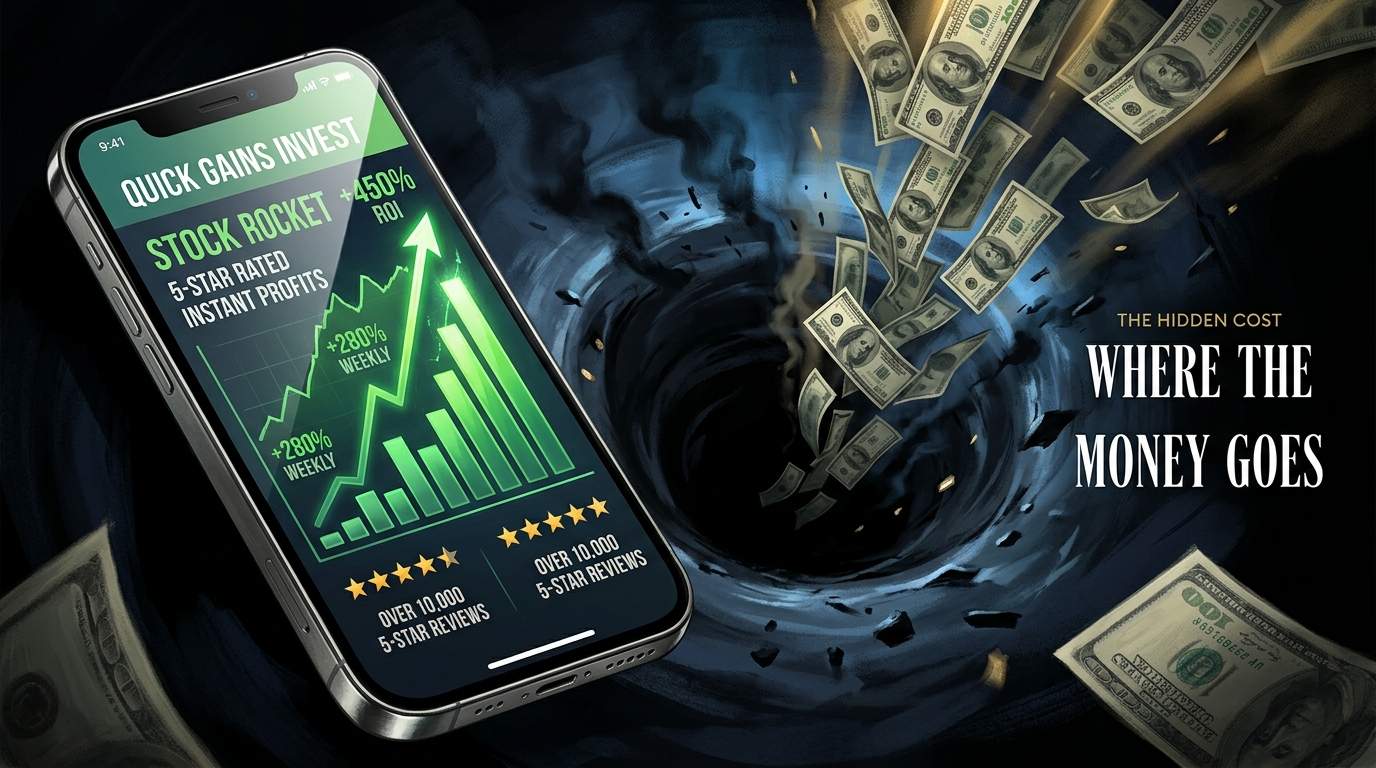




If you also have felt the magnetic pull of your trading app, the allure of a quick score that could turn a few hundred dollars into thousands by the closing bell, you've brushed up against the most potent and dangerous product in modern finance: the zero-days-to-expiration (0DTE) option. These are contracts on major indexes like the S&P 500 that expire within 24 hours, often on the same day. They are cheap, incredibly volatile, and marketed with the seductive language of "limited risk" (you can only lose the premium) and "unlimited upside." This is the frontier where investing morphs into pure, algorithmic-speed speculation. But here is the brutal, unspoken truth: the 0DTE game isn't designed for you to win. It's a precision-engineered arena where the structural advantages belong to institutional algorithms and market makers, and the psychological weaknesses of the retail trader are the commodity being harvested.
Most people look at a 0DTE option priced at $50 and think, "It's just a $50 bet. What's the harm?" They are actually wrong in a fundamental way. They are not placing a simple bet; they are buying a hyper-complex derivative whose price is governed by a sinister-sounding Greek letter: Gamma. Gamma measures how sensitive an option's delta (its price movement relative to the underlying asset) is to the asset's own price movement. For a 0DTE option, gamma is astronomically high. This means the option's price can swing from $50 to $500 with a tiny move in the S&P 500, and just as swiftly crash to zero. The attraction is obvious—the lottery-ticket thrill. But this high gamma is precisely what makes you prey. You are trading a product where time decay, or Theta, eviscerates its value by the minute. That $50 premium isn't just a bet; it's a melting ice cube you're holding in a furnace.
Now, meet your opponents: the institutional trading algorithms. These are not sentient beings making guesses. They are statistical engines plugged directly into exchanges, trading thousands of contracts per second to capture microscopic arbitrage and manage complex risk. When you buy a 0DTE call option, you are not buying it from another hopeful retail trader. You are almost certainly buying it from a sophisticated market maker whose algorithm instantly hedges its exposure by buying or selling the underlying S&P 500 futures. This activity creates "gamma exposure" in the market, which can lead to violent, self-reinforcing price swings—a "gamma squeeze" that pushes the index sharply up or down to trigger a cascade of stop-losses and option expirations. These algos profit from the bid-ask spread, from volatility, and from the predictable behavior of emotional traders. Your $50 premium is a source of delicious, risk-managed income for them. They have the computational power, the speed, and the capital to play a completely different game on the same field.
So, what is the practical reality for an individual? I advise you to stop viewing these instruments as a potential shortcut. See them for what they are: a tax on impatience and a mathematical puzzle weighted against you. Ordinary people see the green charts on social media and the stories of overnight riches, diving in driven by FOMO (Fear Of Missing Out). But masters see a product with a negative expected value for the uninformed trader. They understand that profitability in this arena requires a structural edge you simply do not possess—nanosecond latency, multi-million dollar hedging portfolios, and teams of PhDs adjusting models in real-time.
If you are determined to understand this world, not as a participant but as an informed observer, follow this three-point framework for self-preservation. First, impose the "Time Rule." Never, under any circumstances, hold a 0DTE position open for more than 60 minutes. Set a physical kitchen timer. The rate of time decay accelerates non-linearly in the final hours. What feels like a small move against you can render your position worthless long before the closing bell. This rule forces you to confront the product's true nature: it's a sprint, not an investment.
Second, conduct a "Trade Journal Autopsy." For one month, if you must trade, keep a handwritten log. For every 0DTE trade, record: 1) The entry price and time, 2) The implied volatility percentile at entry (a measure of how expensive the option is relative to historical volatility), and 3) The outcome. You will quickly see a pattern: losses from time decay and buying options when implied volatility is high (and thus more expensive) will likely devastate any lucky wins. This journal isn't to improve your strategy; it's to prove to yourself that you are playing a losing game.
Third, perform the "Inverse Test." Before you hit the buy button on that call option, ask this: "Am I willing to sell this exact option instead?" Selling options (writing them) is how the other side makes money. If the thought of taking on the theoretical, unlimited risk of being the seller terrifies you, it should tell you everything about the asymmetric risk you're actually accepting as the buyer—the near-certainty of losing your entire premium. This mental flip exposes the core asymmetry.
The explosion of 0DTE trading is not a democratization of finance; it is the financialization of casino psychology. It turns the market's closing hours into a globally televised, high-stakes roulette wheel. The algorithms aren't evil; they are amoral efficiency engines. Your thrill is their fuel; your predictable hope is their alpha. The "future" you risk losing in 24 hours isn't just the money in the trade; it's the capital, confidence, and financial stability you could have built through patient, compounded growth in assets you truly understand. The most sophisticated trade you can make today is recognizing a game where the rules are written in code you can't read, on a clock you can't beat, and having the discipline to simply walk away. Your greatest financial edge will always be the ability to not play.
Disclaimer: Mention of any brand or trademark is for identification only and does not imply partnership or endorsement