


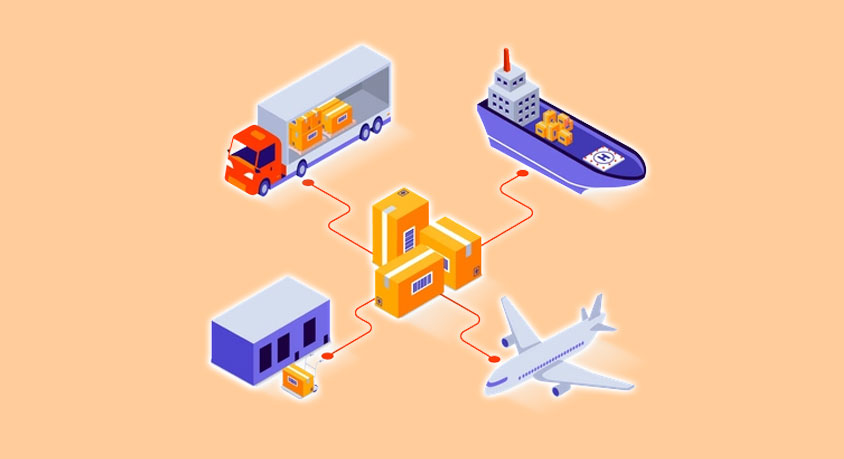
With the vigorous development of e-commerce and the continuous increase in global logistics demand, smart logistics solutions have become important tools for enterprises to improve efficiency, reduce costs, and enhance customer satisfaction. Through the Internet of Things, enterprises can achieve cargo tracking, status monitoring, and transportation optimization throughout the supply chain, greatly enhancing the visual management capabilities of the supply chain.
The core advantage of the Internet of Things in logistics lies in real-time monitoring of the location and status of goods. By implanting RFID tags on goods, integrating GPS modules and sensor networks, logistics companies can obtain key data such as the location information, transportation route, and estimated arrival time of goods in real time. Using this data, logistics managers can adjust transportation strategies at any time, optimize routes and reduce delays. The Internet of Things can also help enterprises track the status of goods during transportation, such as detecting whether there is damage, tilt or other abnormal conditions, thereby ensuring the quality of goods and reducing losses.
Cold chain transportation is one of the typical application scenarios of Internet of Things technology, especially when transporting sensitive goods such as medicine and food that have extremely high temperature requirements. Through temperature and humidity sensors in the Internet of Things, cold chain logistics enterprises can monitor the environmental conditions of goods during transportation in real time to ensure that goods are always maintained within the appropriate temperature and humidity range. For example, cold chain transportation in the pharmaceutical industry usually needs to be maintained between 2°C and 8°C. Internet of Things sensors can continuously monitor these parameters, automatically record and send data to the cloud management platform. Once the temperature or humidity exceeds the specified range, the system will immediately issue an alarm to remind the operator to take measures.
The Internet of Things not only plays an important role in transportation but also brings revolutionary changes in the automation and intelligence of inventory management. Through RFID and sensors, the warehouse management system can track the inflow and outflow of inventory in real time, automatically update inventory information, and reduce manual intervention and operational errors. Amazon's warehouse centers have adopted Internet of Things technology to achieve intelligent inventory management. All goods are tracked through RFID tags. Every item is recorded in real time at each link of inbound, storage, and outbound. The system will automatically schedule replenishment and shipment processes based on inventory data, greatly improving operational efficiency.
The introduction of the Internet of Things is changing the operation mode of the global logistics industry and promoting supply chain management towards intelligence and automation. Through real-time tracking, environmental monitoring and inventory management, the Internet of Things has significantly enhanced the visibility and operational efficiency of the supply chain, helping enterprises make decisions faster and more accurately.
Disclaimer: Mention of any brand or trademark is for identification only and does not imply partnership or endorsement