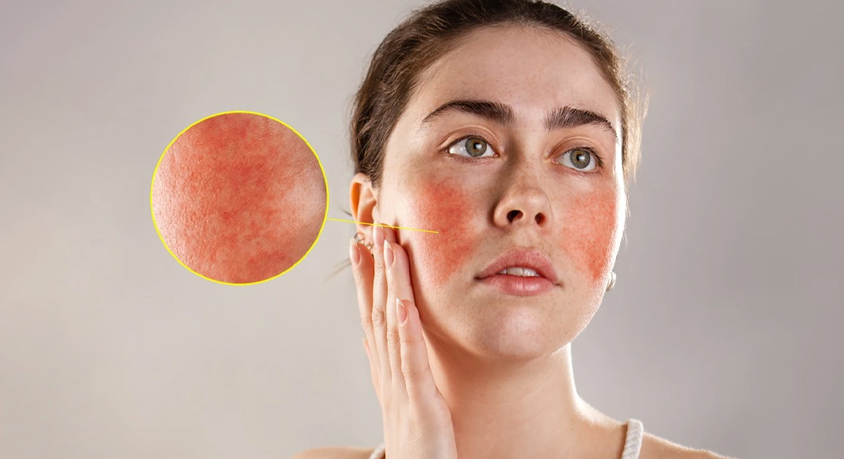
A few months ago, a friend of mine spent $40 on a “soothing” facial serum, excited to finally find something that promised to calm her sensitive skin. Three days later, her cheeks were bright red, itchy, and covered in tiny bumps. She stared at the bottle, confused—“It says ‘for sensitive skin’ right on the label!”—but never thought to flip it over and read the ingredient list. This is a mistake millions of us make: we trust marketing claims over the actual science of what’s inside the bottle. For sensitive skin, though, the ingredient list isn’t just fine print—it’s a survival guide. The truth is, many products labeled “gentle” contain hidden irritants that chip away at the skin’s natural barrier, turning a simple skincare routine into a cycle of redness and discomfort.
To understand why certain ingredients bother sensitive skin, we first need to break down how the skin’s barrier works. Think of your skin as a brick wall: the “bricks” are dead skin cells (called keratinocytes), and the “mortar” is a mix of lipids (fats) that hold everything together. This barrier keeps moisture in and irritants out. For people with sensitive skin, this wall is thinner or weaker—like a wall with loose mortar. Ingredients that might not faze someone with a strong barrier can seep through the gaps, triggering inflammation: redness, itching, dryness, or breakouts. A 2022 study by the American Contact Dermatitis Society found that 60% of people with sensitive skin react to at least one common skincare ingredient, often because their barrier can’t block it effectively. This isn’t a “flaw” in their skin—it’s a difference in how their bodies protect themselves.
The first “assassin” to watch for is alcohol—specifically, denatured alcohol (often listed as SD Alcohol 40, Ethanol, or Isopropyl Alcohol). Marketing often frames alcohol as a “purifying” or “matteifying” ingredient, but for sensitive skin, it’s a barrier destroyer. Alcohol evaporates quickly from the skin’s surface, taking moisture with it. Over time, it breaks down the lipid mortar in the skin barrier, making it even weaker. A 2019 study in the Journal of Cosmetic Dermatology found that using products with 10% or more denatured alcohol daily for four weeks reduced skin moisture by 30% and increased transepidermal water loss (TEWL)—a measure of how much moisture escapes the skin—by 25%. My colleague Lisa learned this the hard way: she used an alcohol-based toner every morning to “control oil,” only to find her skin got oilier (a common reaction—dry skin overproduces oil to compensate) and more sensitive. “I thought the tight, tingly feeling meant it was working,” she said. “Turns out, it was just my skin screaming for help.”
Next is fragrance—both synthetic and “natural” (like essential oils). Fragrance is the single most common cause of contact dermatitis in skincare, according to the American Academy of Dermatology. Even if a product says “unscented,” it may still contain fragrance to mask the smell of other ingredients. Synthetic fragrances are made from hundreds of chemicals, many of which aren’t listed individually (thanks to a loophole that lets brands call them “fragrance” or “parfum” instead of naming each one). Natural essential oils—like lavender or tea tree—can be just as irritating, even though they’re marketed as “clean.” A 2020 study found that 35% of people with sensitive skin react to lavender oil, which can trigger inflammation. The problem isn’t the scent itself—it’s the chemicals in the fragrance that bind to proteins in the skin, triggering an immune response. For people with sensitive skin, this response is stronger, leading to redness or itching.
Certain preservatives are another hidden threat. Preservatives are necessary to keep products from growing bacteria or mold, but some are harsher than others. Methylisothiazolinone (MIT) and Methylchloroisothiazolinone (MCIT) are two of the most problematic—they’re often found in low-cost cleansers, moisturizers, and body washes. Another preservative to watch for is formaldehyde releasers (like DMDM Hydantoin or Imidazolidinyl Urea), which slowly release small amounts of formaldehyde to kill bacteria. These can irritate sensitive skin, especially with long-term use.
So how do you read an ingredient list like a pro? Start with the order: ingredients are listed from highest to lowest concentration. If an irritant (like denatured alcohol or fragrance) is in the first five ingredients, it’s probably too high for sensitive skin. Look for specific names, not vague terms—“fragrance” is a red flag, but “lavender oil” (even natural) should also be avoided if you’ve reacted to it before. Keep an ingredient list reference card handy (one of the most useful tools for sensitive skin) to jot down irritants you’ve reacted to—this turns trial-and-error into a targeted process. And always do a patch test: apply a small amount of the product to the inside of your arm, wait 24–48 hours, and check for redness or itching before using it on your face.
Lisa now swears by fragrance-free cleansers and hypoallergenic moisturizers, and she always keeps her reference card in her purse when shopping. “I used to feel like my skin was against me,” she said. “Now I feel like I’m speaking its language.” That’s the power of understanding ingredients: it turns frustration into control. Sensitive skin doesn’t have to mean avoiding skincare altogether—it just means being a smarter consumer. By learning to spot the hidden “assassins” in ingredient lists, you can build a routine that supports your skin’s barrier, not breaks it.
Disclaimer: Mention of any brand or trademark is for identification only and does not imply partnership or endorsement