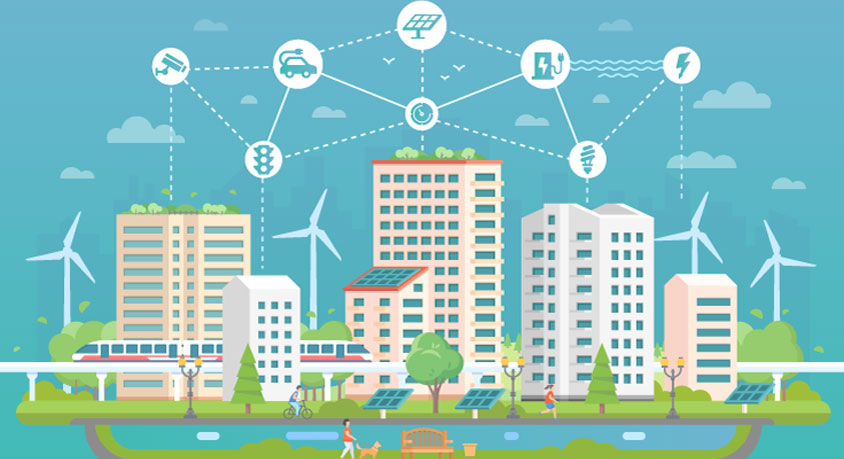
In the grand blueprint of smart cities, IoT technology, like a strong driving force, is gradually penetrating into every corner of urban life. This has greatly enhanced the efficiency of public services and the convenience of citizens' lives. From smart parking to smart street lights, to efficient waste management systems, IoT technology optimizes the allocation of urban resources, so that the beautiful vision of a smart city is gradually becoming a reality.
Smart Parking: easing the city's "Parking Difficulty"
“Parking is a headache for many citizens. The introduction of IoT technology provides an innovative solution to this problem. The smart parking system monitors the occupancy of parking spaces in real time through sensors or locks installed on the ground, and transmits the data to the cloud platform in real time. Citizens can easily check the nearby vacant parking spaces through cell phone APP to realize accurate navigation and fast parking. At the same time, the smart parking system can also be seamlessly connected with the payment platform to realize the automatic deduction and payment of parking fees, which greatly facilitates public travel.
Smart Street Lights: the light of wisdom that illuminates the city
The smart street light system utilizes IoT technology to realize remote monitoring and smart control of street lights. The system can automatically adjust the brightness and switching time of street lights according to the traffic flow, human flow and environmental light intensity, which not only ensures the demand of road lighting, but also effectively saves energy. In addition, smart street lights can also integrate environmental monitoring, video surveillance and other functions into one, providing strong support for the city's security management and environmental monitoring. In emergency situations, smart streetlights can also be used as temporary communication base stations to facilitate emergency rescue.

Waste Management: creating a green and livable environment
Garbage management is an important part of urban environmental management. The application of IoT technology makes garbage management more efficient and precise. Smart garbage cans monitor the overflow of garbage through built-in sensors and send the information to the garbage collection system in real time. Based on the information received, the system automatically plans the optimal collection route and time to ensure that the garbage is cleaned and disposed of in a timely manner. At the same time, the smart garbage management system can also classify and identify garbage and analyze statistics, providing a scientific basis for developing and implementing urban garbage classification policies.
IoT: neural network of smart city
IoT technology, as the neural network of the smart city, closely connects all kinds of public facilities and services in the city. Through data collection, transmission and analysis, IoT technology realizes comprehensive perception and smart response to the city's operation status. This smart management improves the efficiency and quality of public services and promotes the optimal allocation of urban resources and sustainable development.
With the continuous progress of technology and the expansion of application scenarios, we have reason to believe that IoT technology will inject a more powerful impetus for the development of smart cities and make the life of citizens better and more convenient.
Disclaimer: Mention of any brand or trademark is for identification only and does not imply partnership or endorsement