



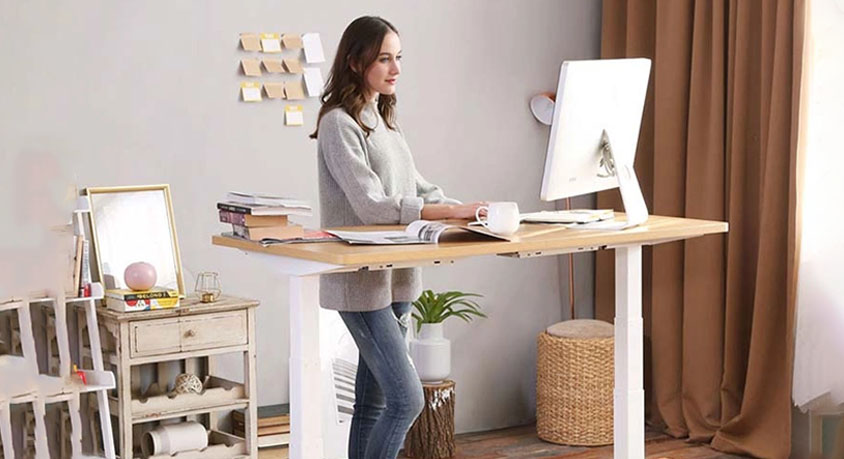
It started as one of those half-serious personal challenges — part curiosity, part guilt. I’d been sitting for hours every day, editing, scrolling, drinking lukewarm coffee, pretending that a few stretches would undo it all. One night, while rubbing a dull ache in my lower back, I decided to test the cliché: standing to work. Just thirty days, no hashtags, no health crusade — just to see what would actually happen.
The first day? Miserable. My calves ached, my feet pulsed like I’d danced in bad shoes. I tried to stay upright at my new adjustable desk, pretending to be productive while silently counting down the minutes. I lasted forty, maybe fifty, before collapsing back into my chair. That’s when I realized: the trick isn’t “standing all day.” It’s learning the rhythm — when to stand, when to sit, when to move.
By the end of week one, I found a flow. I’d stand in the morning while replying to emails, sit for deeper focus work, then stand again in the afternoon to fight that post-lunch fog. It wasn’t perfect, but it felt manageable. I bought an anti-fatigue mat — soft, springy, almost luxurious — and learned to shift my weight every few minutes. Standing stiffly was worse than sitting all day. Movement, I found, was the secret ingredient.
Around day ten, I started noticing changes. Subtle ones, but real. My energy didn’t nosedive by 3 p.m. I wasn’t bouncing off the walls, but I felt more alert, like someone had cracked open a window in my brain. There’s some data floating around saying that alternating between sitting and standing can reduce fatigue, and I believe it. You don’t slump into your own body as much when you’re upright.
There were still bad days. My feet protested constantly until I started wearing sneakers indoors — not the stylish kind, just the practical ones with cushioning. Once I did, everything felt easier. That’s when I realized standing work isn’t about discipline; it’s about setup. The right shoes, mat, and desk height matter more than willpower.
Mentally, something shifted too. When I stood, I felt more… switched on. It’s strange — your posture affects your headspace. You can’t exactly curl into the screen when you’re on your feet. I noticed I was more decisive in emails, quicker in thought. Maybe it was coincidence, maybe not. Standing made me feel like I was participating in my work rather than hiding behind it.
Week three, things got smoother. My back stopped complaining as much. I wasn’t cured, but there was a definite ease by the end of each day. I moved more naturally — walking to refill my water didn’t feel like a disruption anymore, just part of the work rhythm. A kind of flow developed between sitting, standing, stretching. Small, steady wins.
But I also learned moderation the hard way. One overconfident Monday, I stood for nearly four hours straight. By evening, my legs were lead. That was the day I understood why even the experts suggest alternating every 30 to 60 minutes. Balance, not endurance.
By week four, the setup looked almost aesthetic: laptop on a riser, wireless keyboard and mouse, a plant at eye level — because if you’re going to stand, you might as well make it stylish. The process had become less of an experiment, more of a quiet habit. I wasn’t chasing transformation anymore; I was just… comfortable. Less stiffness, better awareness, a faint sense of lightness.
Here’s what surprised me most: the mental calm. Standing made me more aware of my body throughout the day — the way I leaned, the tension in my shoulders, the need to take breaks. It wasn’t about burning calories or optimizing productivity. It was about paying attention. Somewhere between typing and stretching, I found that rare thing modern work usually kills — a sense of physical presence.
By day thirty, I wasn’t keeping track anymore. The experiment had simply become my normal. Some days I stood for an hour, others barely half. I didn’t guilt myself either way. That’s what makes standing work sustainable — flexibility. On days I was tired or deep in creative flow, I sat. On days I felt restless, I stood. No rules, just rhythm.
The results weren’t revolutionary. My posture improved a bit, my back hurt less, my energy stayed steadier. But what mattered more was the shift in awareness. I no longer sank unconsciously into my chair for hours. I moved. I paid attention. I gave my body permission to participate in my work instead of being crushed by it.
Even now, after the “30 days,” I still stand for a few hours a day. Sometimes while on calls, sometimes while writing, sometimes just to change the energy in the room. I keep my sneakers nearby, the mat underfoot, the stool next to me when I need to perch. Nothing fancy — just small tools that make the habit easier.
Standing to work didn’t transform my life. But it made it softer around the edges — more balanced, less static. I still sit plenty. I just sit differently now, with the awareness that I can shift at any time. That might be the real outcome of thirty days on my feet: not better posture, but better presence.
Disclaimer: Mention of any brand or trademark is for identification only and does not imply partnership or endorsement