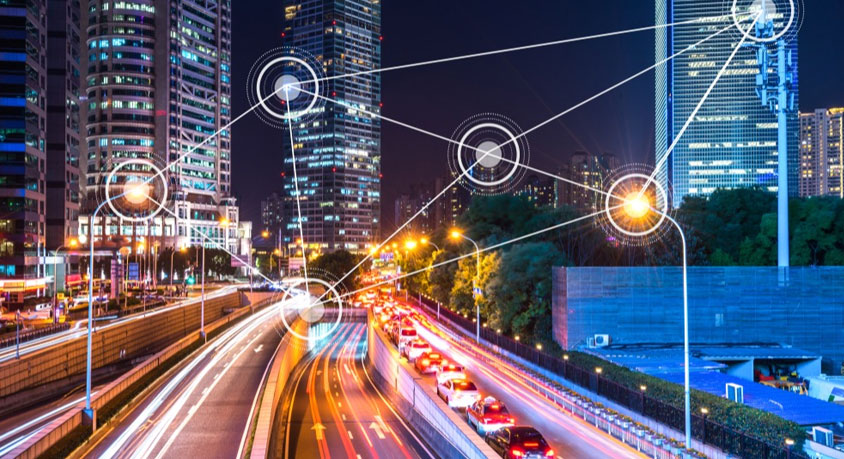



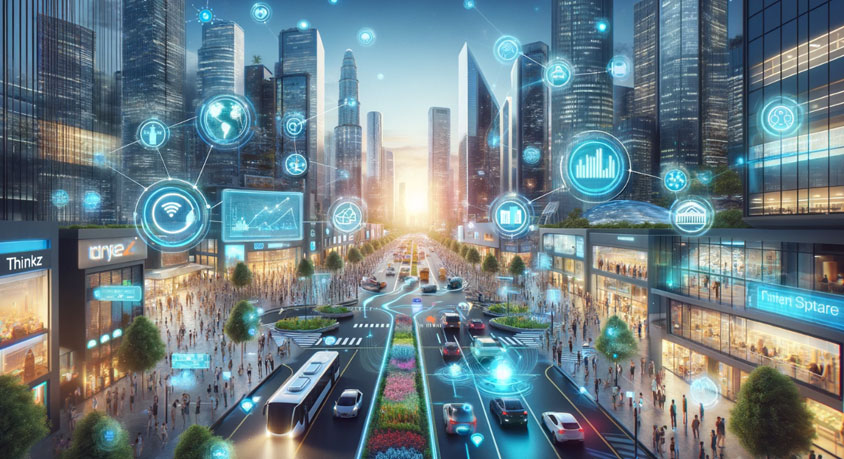
In the grand blueprint of smart cities, the deep integration of autonomous driving and IoT is becoming a key force driving transportation change. With the continuous breakthroughs in technology and the wide application of Vehicle to Vehicle (V2X) technology, real-time communication between vehicle to vehicle (V2V) and vehicle to infrastructure (V2I) has become possible, which opens up a brand new path to improve road traffic safety and optimize the performance of autonomous driving.
V2V and V2I: the cornerstone of building a smart transportation ecosystem
V2V technology allows vehicles to directly exchange information between each other, such as speed, position, driving intentions, etc., thus realizing a more accurate perception of the surrounding environment. This instant communication can effectively avoid the risk of collision and provide valuable warning time for drivers or autonomous driving systems. V2I further extends the communication range, enabling vehicles to interact with traffic signals, road signs, parking lots and other infrastructure for more efficient route planning and driving control. Through the comprehensive application of V2X technology, a highly collaborative and smart transportation ecosystem is gradually taking shape.
Evolution of autonomous driving technology and seamless integration of urban transportation
Automatic driving technology is a gradual transition from assisted driving to fully autonomous driving. In a smart city, self-driving cars are not only able to navigate and avoid obstacles autonomously, but also access real-time urban traffic information such as road conditions, congestion, and accident warnings through IoT technology, so as to make optimal driving decisions. This seamless integration not only improves transportation efficiency, reduces congestion and waiting time, but also greatly enhances the travel experience for passengers.
IoT helps reduce the risk of accidents and transportation emissions
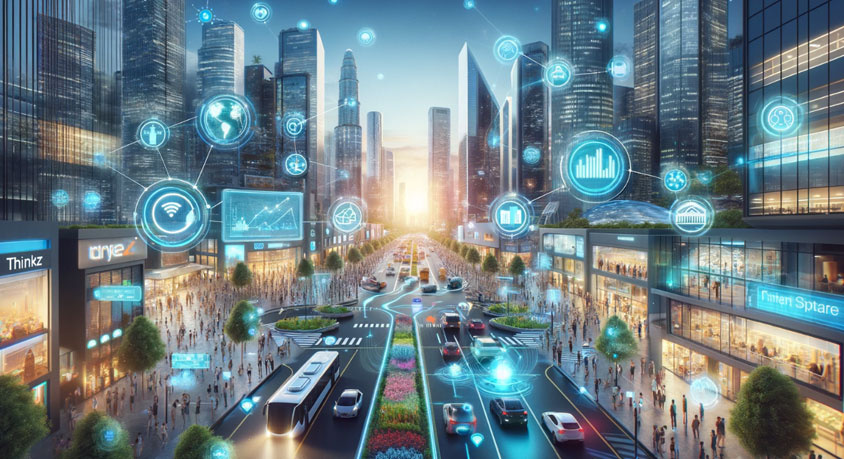
Through real-time communication via V2X technology, vehicles are able to sense and respond to potential dangers in advance, effectively preventing traffic accidents. In addition, IoT can also help realize precise regulation of traffic flow to avoid excessive congestion and ineffective driving, thus reducing unnecessary fuel consumption and exhaust emissions. In the long run, this will help improve urban air quality and promote sustainable development.
Building safe, efficient, and green intelligent transportation together
Although the combination of autonomous driving and IoT brings unlimited possibilities for smart city transportation, its development still faces many challenges, such as technology maturity, regulations and standards, data security and privacy protection. In the future, with the continuous progress of technology and the gradual improvement of policies, we have reason to believe that autonomous driving and IoT will play a more important role in the construction of smart city transportation. Together, they will promote the comprehensive upgrading of the transportation system, realize a safer, more efficient and greener mode of travel, and bring a better living environment for urban residents.
The integration of automatic driving and IoT is an inevitable trend in the development of smart city transportation. They are interdependent and mutually reinforcing, and together they draw a grand blueprint for future transportation. In this change, we need to continue to innovate, the courage to explore, but also need the broad participation of all sectors of society and joint efforts. Only in this way can we usher in a new era of safer, more efficient and greener intelligent transportation.
Disclaimer: Mention of any brand or trademark is for identification only and does not imply partnership or endorsement